State of Migration Affecting the Dominican Republic 2014
This annual publication seeks, for the fourth consecutive year, to review the main events and trends in international migration that affected the country in 2014. Written by Natalia Riveros with invited authors Carlos Abaunza, Adriana Salcedo, and Eddy Tejeda, it addresses five major themes, including migration in the insular Caribbean, Dominican emigration, immigration to the Dominican Republic, public policy developments, and the human rights situation of migrants and their families.
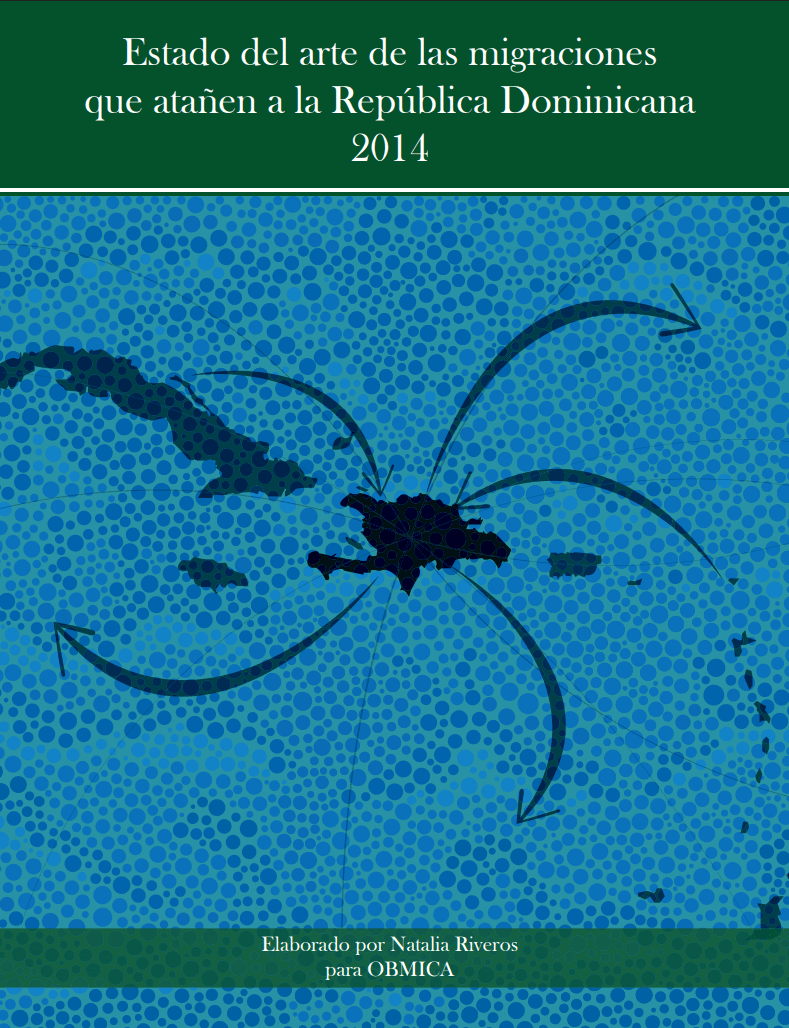
This annual publication seeks, for the fourth consecutive year, to offer a general review of the main events and trends in international migration that affected the country in 2014.
Written by OBMICA associate researcher Natalia Riveros, with invited authors Carlos Abaunza, Adriana Salcedo, and Eddy Tejeda, the report addresses five major themes: migration in the insular Caribbean, Dominican emigration abroad, immigration to the Dominican Republic, the evolution of public policies on migration, and the human rights situation of migrants and their relatives.
This edition includes issues not addressed in previous reports, such as Haitian migration to Ecuador and Peru en route to Brazil and a contextualization of statelessness in the Caribbean region. It also takes a deeper look at the dream of migrating and its impact on the Dominican collective imagination. In addition, the report updates the situation of descendants of Haitian immigrants born in the Dominican Republic who were affected by ruling 168-13, detailing the advances and challenges posed by implementation of Naturalization Law 169-14.
State of Migration Affecting the Dominican Republic 2014 seeks to provide relevant information to public policymakers and civil society. It finds that the main challenge in addressing migration at the regional and local levels remains how to achieve governance of irregular migration flows that is more respectful of the dignity and integrity of migrants.