
Coronavirus and Pre-Existing Inequalities: Mobilities in the Dominican Republic
OBMICA, in coordination with the Friedrich Ebert Foundation and the citizen monitoring platform Poletika, organized the forum "Coronavirus and Pre-Existing Inequalities: Mobilities in the Dominican Republic." We are sharing the publication that gathers the presentations delivered by our director Bridget Wooding and activist Ana Maria Belique of the Reconoci.do Movement. The discussion addressed migration in the context of the coronavirus emergency and the differentiated impact of the pandemic on migrants, refugees, and stateless people.
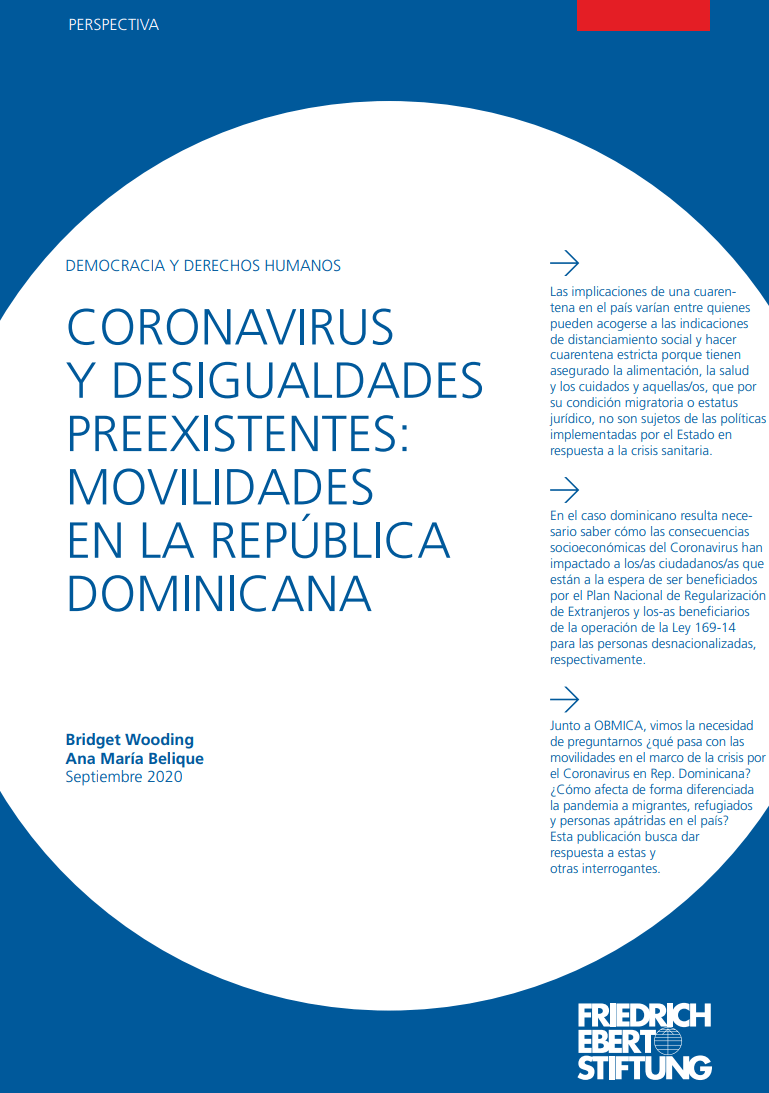
OBMICA, in coordination with the Friedrich Ebert Foundation and the citizen monitoring platform Poletika, organized the forum "Coronavirus and Pre-Existing Inequalities: Mobilities in the Dominican Republic." We are sharing the publication that gathers the presentations delivered at that event by our director Bridget Wooding and activist Ana Maria Belique of the Reconoci.do Movement.
On May 7, OBMICA, together with the Friedrich Ebert Foundation and Poletika, organized the forum "Coronavirus and Pre-Existing Inequalities: Mobilities in the Dominican Republic" to address migration issues in the context of the coronavirus emergency in the Dominican Republic and to examine how the pandemic affects migrants, refugees, and stateless people in differentiated ways. We are sharing the publication that compiles the presentations made during that event.
Introduction
The pandemic is a public health problem with profound social implications. That reality reminds us that analyzing the pandemic involves much more than counting infections, deaths, and recoveries. In the Dominican Republic, as in the rest of the region, governments have implemented a range of measures to confront the virus and its consequences. Social distancing and quarantine were used to reduce the infection curve, while programs such as FASE, Stay at Home, and Pa' Ti sought to mitigate the economic effects of the pandemic.
The implications of quarantine vary greatly between those who can follow social distancing guidelines and remain in strict quarantine because they have food, health care, and care work secured, and those who, because of pre-existing conditions tied to lack of nationality or migration status, are excluded from socioeconomic policies adopted during the pandemic and are part of the informal labor market, making it impossible for them to comply fully with recommendations to stay at home.
You can download the PDF document here: Coronavirus and Pre-Existing Inequalities