Civil Society and the Dominican Government Hold Dialogue on the National Regularization Plan
February 22, 2014--Twenty-five (25) civil society organizations met to define their role within the National Plan for the Regularization of Foreigners in Irregular Situation and to dialogue with state entities on February 20 and 21 in Juan Dolio, Dominican Republic.
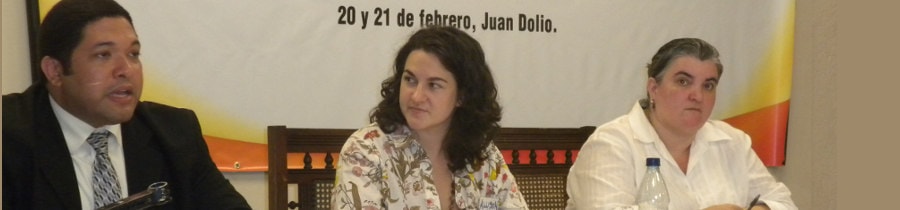
22 February 2014--Twenty-five (25) civil society organizations met to define their role within the National Plan for the Regularization of Foreigners in Irregular Situation and to dialogue with state entities on February 20 and 21 in Juan Dolio, Dominican Republic. The activity, in which OBMICA served as co-organizer, enabled an exchange among authorities from the Presidency of the Republic, the Ministry of Interior and Police, the General Directorate of Migration, the trade union sector, international organizations, and a strong representation of civil society organizations that accompany migrant populations in different parts of the country.
In the first part of the workshop, the representative of the Ministry of Interior and Police - the body designated by the Executive branch for the implementation of the Plan - reviewed the central aspects of the National Migration Regularization Plan. For her part, the representative of the International Organization for Migration (IOM) presented examples of good practices advanced in other countries on migration regularization. OBMICA gave a presentation on practical and strategic considerations for incorporating a gender perspective in the preparation and implementation of the regularization plan.
Based on the dialogue among the different organizations, some lines of action were proposed to ensure the effective implementation of the National Regularization Plan, such as:
1. Ensure that the information campaign foreseen in the Plan includes diverse means of dissemination at national and local levels, respecting the linguistic particularities and technological accessibility of the groups subject to the plan, as well as persons without literacy, persons with disabilities, gender differences, and geographical location.
2. Promote clear mechanisms for the real and effective participation of civil society organizations, including spaces for inter-sectoral meetings with the State, employers' associations, and workers' unions. This promotion of mechanisms must define the responsibilities of the different actors to facilitate access to the documentation requirements and proof of roots required from persons subject to the Plan.
3. Ensure that the training foreseen in the Plan reaches as a priority the civil society organizations operating at local and regional levels on topics such as implementation of the Regularization Plan, social oversight, and the normative framework of immigration in the Dominican Republic.
4. Guide a realistic and fair management in the implementation of the Plan. Realistic by ensuring that the required documentation and processing costs needed to regularize are within reach of the applicants, especially women heads of household and workers. And fair because the State must recognize the validity of the official documents received by migrants to work in the country - especially in the sugar sector - as well as the positive migratory status of the women who accompanied them.
5. Form a National Oversight Platform where civil society organizations, businesses, trade unions, churches, and grassroots groups can carry out their monitoring work and communicate progress and challenges in the implementation of the National Regularization Plan to the governmental entities responsible for its execution.
See the final statement of the participating organizations.