We Present the Results of Research on Internal Trafficking of Women, Girls, Boys, and Adolescents
March 19, 2019.- On March 19, OBMICA presented the results of the exploratory research on the internal trafficking of women, girls, boys, and adolescents in the Dominican Republic, prepared with the support of the Spanish Agency for International Development Cooperation (AECID).
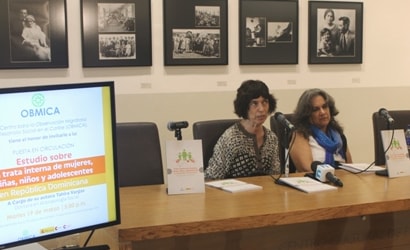
March 19, 2019.- On March 19, OBMICA presented the results of the exploratory research on the internal trafficking of women, girls, boys, and adolescents in the Dominican Republic, prepared with the support of the Spanish Agency for International Development Cooperation (AECID).
This is the qualitative study carried out by the renowned experts Tahira Vargas and Segundo Maldonado Abreu, which sheds light on this scourge in the country and dismantles myths and beliefs about this complex problem, with its diversity of practices and operational modes.
Before a large and diverse audience, Blanca Yanez Minondo, general coordinator of Spanish Cooperation in the country, delivered the opening remarks of the event, dedicated to the relevance of the study as a solid knowledge tool for understanding the problem of human trafficking in the country and the mechanisms that drive this scourge which so deeply affects and fractures Dominican society.
OBMICA has among its areas of work the issue of human trafficking and migrant smuggling, and this work promises an unusual approach to the issue of trafficking, which often focuses on the emigration of Dominican women and men and the risk of trafficking.
As OBMICA Director Bridget Wooding explained in her remarks, this work contributes to understanding how forms of trafficking are accepted and normalized in the country. Based on evidence from interviews with trafficking survivors and traffickers, it is not only a source of information but also an experience that makes it possible to build pathways for prevention, timely intervention, and rescue, Wooding emphasized.
Regarding the study, Bridget Wooding noted that the researchers "offer valuable contributions for public policies in their recommendations" and added that their findings reveal "new concerns that require greater attention, such as the practice of marriages to 'honor' women, which can lead to re-victimization and victims who become traffickers."
Lead researcher Vargas explained that this study was based on identifying cases of trafficking survivors across diverse modalities, not limited to trafficking for sexual exploitation, and on key informants in Santiago, Espaillat, La Vega, San Cristobal, Azua, Peravia, Barahona, and the provinces that make up Greater Santo Domingo.
"An important factor causing trafficking is the situation of families, which have a circle of violence from parents toward children, or from any relative toward minors, causing them to leave the family due to physical and sexual abuse and pushing them into situations of risk, into trafficking networks where they are offered money through deception," added social anthropologist Tahira Vargas.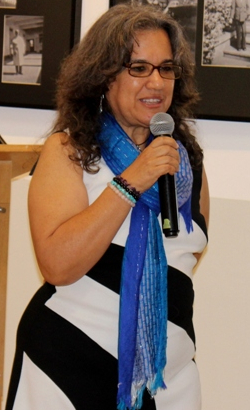
The author states: "Practices and taboos surrounding sexuality strengthen a culture that does not consider many validated practices as trafficking and therefore does not lead to reporting suspects of trafficking and exploitation, contributing to keeping the problem invisible."
For his part, assistant researcher Segundo Maldonado stressed the difficulties in collecting data during the research due to the vulnerable situation of women victims of trafficking, and therefore called for a critical look at the problem that can serve as a basis for articulating public policies that tackle and dismantle this sad reality experienced by women, girls, boys, and adolescents in the Dominican Republic.
Over the years, the Centre for Migration Observation and Social Development in the Caribbean has worked on research into trafficking issues related to the island and the Caribbean region, but this is the first time it has focused on internal trafficking.
The Observatory, which in 2019 commemorates 10 years of work oriented toward research for action, focused on migration and in favor of the human rights of migrants and their families, hopes that this book will provide inputs for public policy makers and social organizations working on the issue.
ABOUT THE STUDY:
Although 70% of victims are women, the Study on the internal trafficking of women, girls, boys, and adolescents in the Dominican Republic also records abuses affecting men, especially adolescent boys, such as forced labor, including agricultural laborers or grocery delivery workers, and sexual exploitation for commercial purposes.
Trafficking in persons for the purpose of commercial sexual exploitation was identified in both sexes, among adolescents and adults. In both sexes, two recurring patterns were found: sexual exploitation by friends and sexual exploitation caused by sexual abuse. Financial contributions and assistance from friends are forms of concealing abuse against youth, the expert explained during her presentation.
The phenomenon goes beyond the sex trade. Among the violations of victims' rights are labor exploitation of males, "honorable" marriage of females, "servile" or "forced" marriage of females, insertion into criminal networks of both females and males, and labor exploitation in domestic work.