
We Presented the Protocol in the Four Cardinal Points of the Country
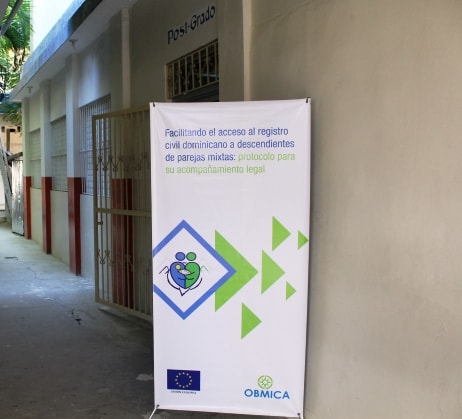
OBMICA promoted the guide "Facilitating Access to the Dominican Civil Registry for Descendants of Mixed Couples: protocol for their legal accompaniment," covering the eastern region (San Pedro de Macoris), the north of the country (Dajabon and Santiago), and the southwest of the country (Barahona).
San Pedro de Macoris
The team traveled to the city of San Pedro where, hand in hand with ASCALA, it presented the legal accompaniment guide on Wednesday the 14th. With a large group of people headed by the authorities of that province, the Civil Registrar of the First District of San Pedro de Macoris, Dr. Herminia Puente; the Civil Registrar of the Second District of San Pedro de Macoris, Felix Francisco De Jesus Polonio; and the head of the Statistics Department of the Doctor Antonio Musa Regional Hospital, Ms. Mercedes Garcia, who gathered in the Francisco Comarazamy Hall of the city hall, the audience praised the protocol and expressed its commitment to supporting the elimination of under-registration in that region.
Dajabon
On the 15th, our guide was presented in the northwestern area of the country, in the border zone of Dajabon. This event, organized with the collaboration of the Juan Montalvo Center, drew a good turnout of interested participants, among whom community organizations and representatives of the National Council for Children and Adolescents (CONANI) stood out. Gustavo Toribio, of the Juan Montalvo Center, delivered the welcoming remarks to participants on behalf of the host institution.
Antonio Rodriguez, representative of the Neighborhood Association of Dajabon, stated that after learning about the contents of the Protocol they were able to better understand the dramatic situation experienced by the boys and girls of mixed couples on the border due to the lack of documentation.
Santiago
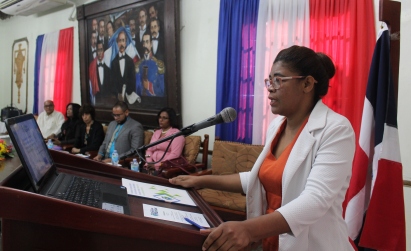
In Santiago de los Caballeros, affected persons used the presentation of the protocol to share the failed attempts they had made to access the Dominican civil registry through the registry offices in that district. Surely the new knowledge contained in the Protocol will help change this situation. Wendy Osirus, coordinator of the Montalvo Center in Santiago, encouraged those present to seek assistance when beginning the documentation process. In that sense, the audience identified with the stories collected in the documentary "Libertad," made by filmmaker and photojournalist Tatiana Fernandez for OBMICA and the Mixed Couples Project.
Barahona
The last of the regional meetings of 2018 to present our legal accompaniment protocol took place in Barahona with CEDESO. This presentation event, held at UCATEBA on November 28, 2018, also included remarks by co-author Domingo Rincon. What gave this meeting its distinctiveness, however, was the lively participation, with interventions and questions, of the CEDESO promoters who attended the event. The young companions of the children of mixed couples from the region spoke about the obstacles they encounter in their work, sharing their experiences and adding to the recommendations of the guide.
LIBERTAD
At the presentation, the short documentary "Libertad," by Tatiana Fernandez Geara, was screened. It portrays the lives of people affected by under-registration who receive accompaniment from PPM promoters. The video was supported by the European Union and American Jewish World Service.
Words from Tatiana Fernandez Geara
"When I started the research for 'Libertad' I had no idea that I would end up becoming so involved in the different stories. Over time I got to know the affected persons more, and I found myself frustrated and happy along with them as the processes became more complicated or were resolved. I personally have never had to worry about identity issues, and it really is not something that most people around me question, but rather simply take for granted. But at the end of the day, as Naomie says in her interview: 'A person without identity, it's as if they don't exist!' I hope this documentary moves anyone who has power over the decisions affecting the sons and daughters of mixed couples in the Dominican Republic, and not necessarily for emotional or subjective reasons, but for legal ones, by seeing that fundamental rights of Dominican women and men are being violated, causing them to stagnate and preventing them from moving toward the freedom to be who they deserve to be."