
Dominican@s for Rights Position Statement, September 2022
?With Hurricane Fiona impacting excluded communities in the east of the country, we Dominicans of Haitian descent are here calling on all of the Dominican Republic for solidarity so that we may address an urgent problem that can no longer be postponed: our effective inclusion in the development of our own country. This September 23 marks the 9th anniversary of Judgment 168-13, the...?
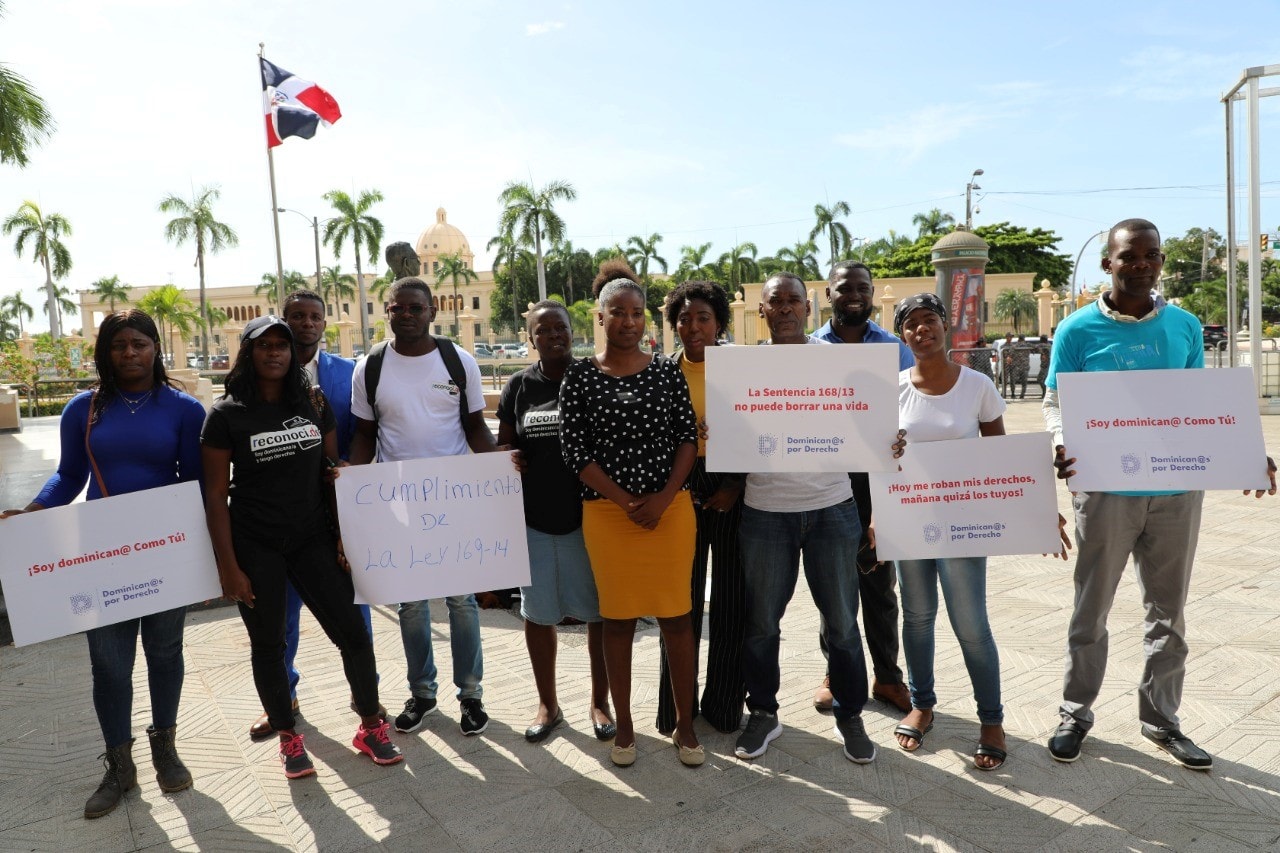
"With the impact of Hurricane Fiona striking excluded communities in the east of the country, we Dominicans of Haitian descent are here calling on the solidarity of the entire Dominican Republic so that we may tackle the solution to an urgent problem: our effective inclusion in the development of our own country.
This September 23 marks the 9th anniversary of Ruling 168-13, the arbitrary decision of the Constitutional Court that denationalized four generations of Dominicans for being the children of migrant workers. More than 90,000 Dominicans of Haitian origin do not have the civil documentation necessary for the full exercise of their citizenship, documentation that would allow them to participate actively in democratic life and promote the progress of their communities.
State non-compliance
The State has failed to comply with the commitment assumed in Law 169-14 to address the citizenship problems caused by TC 168-13, in accordance with the constitutional mandate requiring equal rights and opportunities for all Dominicans. Despite promises of a solution in the PRM government program, the current authorities have intensified the harassment and discrimination of nationals because of the migrant origin of their parents, to the detriment of thousands of families and communities already affected by poverty and social exclusion. Over the past two years, the situation of Dominicans living in marginalized rural and urban communities has worsened, with lack of documentation acting as a factor of exclusion and impoverishment. The government keeps the doors closed to community leadership, implements discriminatory measures such as the segregation of birth certificates of Dominicans who are children of migrants, blocks documentary solutions established in Law 169-14, and carries out arbitrary detentions with more than 800 attempts to expel nationals across the country.
Close to 34,000 people remain without access to their documentation at the Central Electoral Board, which imposes on Dominicans of Haitian descent requirements and procedures not demanded of the rest of the citizenry, annuls their original records, and transcribes them into new books in order to challenge them in court. Obtaining certificates, renewing ID cards, registering births, among other simple procedures, is an odyssey for the 27,000 Dominicans whose documents were restored.
Current situation
Two years ago, the Ministry of Interior and Police abruptly closed the office in charge of implementing Law 169-14, once again leaving 8,755 Dominicans who participated in the Special Registration for Naturalization process in limbo, now with the provisional documentation granted to them expired and without any response regarding mechanisms for accreditation of their nationality... Lack of documentation has a negative impact on society as a whole: it prevents Dominicans from receiving the assistance the government implemented during the Covid-19 pandemic and now after declaring an emergency in the areas affected by the hurricane, but it also keeps people from realizing their potential and mitigating hardship through their own efforts. Without a valid ID card it is impossible to register with the Social Security Treasury, access health insurance, pursue higher education, marry, save in financial institutions, receive scholarships, or benefit from entrepreneurship support programs.
Arbitrary detentions keep neighborhoods and bateyes across the country on edge. The government criminalizes citizens based on their skin color, family origin, and the documentation problems the State itself has created, which violates the right to freedom of movement and limits opportunities for progress. So far this year, more than 800 attempts have been reported to expel Dominicans from their own country. The Dominican@s por Derecho Platform, activists, and allied organizations demand the design of public policies that promote the inclusion of a population whose right to nationality has been harmed for so many years. We advocate for the correct implementation of Law 169-14 for the benefit of its intended recipients and for other instruments that guarantee identity documentation without discrimination."