
OBMICA Shares the Results of Its Research Childhood on the Move at the Border
During the months of October, November, and December, OBMICA held four workshops to share the results of the study on Unaccompanied Children and Adolescents on the Move between Haiti and the Dominican Republic, carried out with UNICEF technical support and European Union financial support (2018/398-626).
These activities took place in Dajabon on October 15, in Pedernales on October 26, 2019, in Jimani on November 27, and in Comendador on December 7, with the participation of key and strategic informants who collaborated in this research, as well as other members of civil society, community representatives, and officials from national and international bodies in the areas referenced. In total, the workshops brought together 139 participants.
The research sought to gain a better understanding of the child and adolescent population that regularly crosses from Haiti into the Dominican Republic, their conditions, motivations, risks, and the care and protection they receive. Based on the results of this work, the findings support dialogue and political advocacy with government authorities linked to the Child and Adolescent Rights Protection System, for the protection and restoration of the rights of this population in border transit or migratory movement, and for their protection against crimes such as trafficking in persons.
The workshops presented the contextual situation framing children on the move and the normative framework of the study, with emphasis on the methodology used and the scope of the results. Subsequently, a balance was drawn of motivations for migration and the situations of children and adolescents on the move based on the narratives of the children and adolescents interviewed. The following typology was highlighted in identifying the conditions of Children and Adolescents on the Move: a) children and adolescents living on the streets in the Dominican Republic; b) girls in domestic servitude in the Dominican Republic; c) independent adolescents in labor situations in the Dominican Republic; d) children and adolescents in reintegration processes in Haiti after going through deportations; e) girls stranded at the border waiting for family reunification in the Dominican Republic; f) children crossing from Haiti to attend school in the Dominican Republic; g) children on the Haitian side of the border affected by migration and whose parents are in the Dominican Republic.
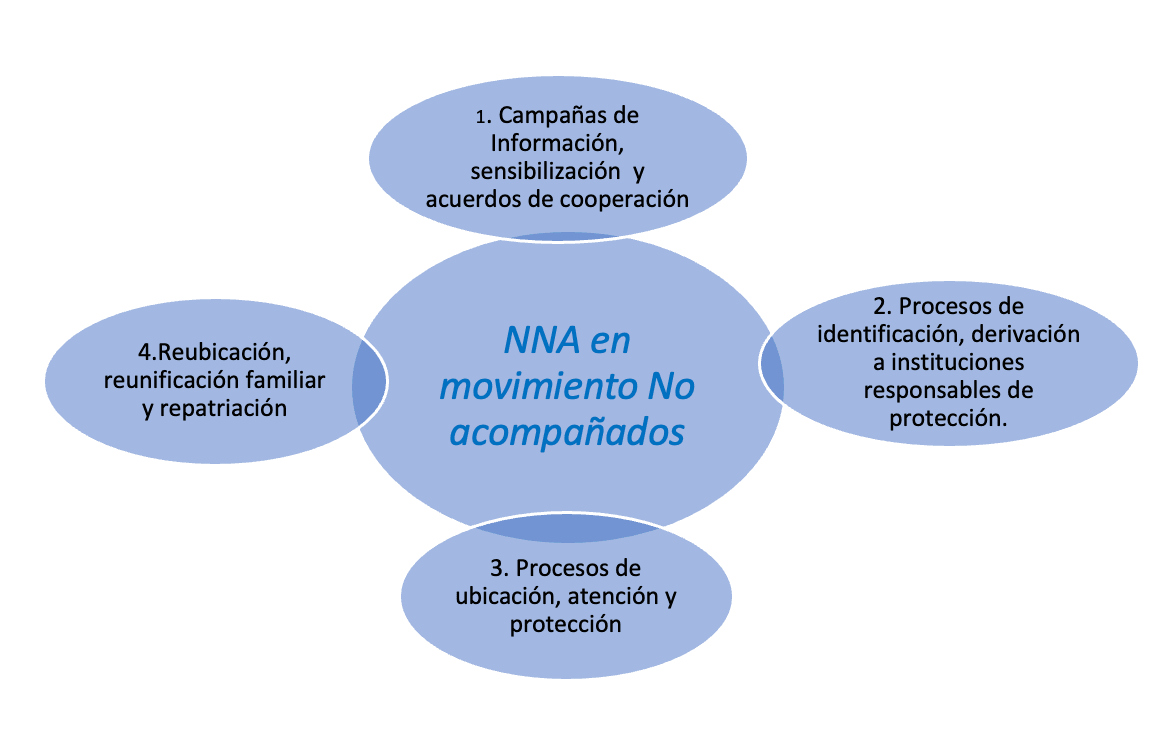
Next, the findings from the phases related to sensitization and prevention of unaccompanied children and adolescents on the move at the border were presented; the processes related to protection and care for this population in the border area, with emphasis on the identification of shelters and protection protocols; and finally, the rules, protocols, and collaborative actions between the Dominican Republic and Haiti in processes of relocation and family reunification of children and adolescents in custody.
In the final section of the workshop, the study's recommendations and suggestions were presented with a view to contributing to improved protection of this cross-border population, followed by an exchange of opinions and perspectives among participants, highlighting the inter-institutional approach within the framework of children's rights.
The dialogue in the workshops has proved highly relevant and enriching, as has the pending challenge of achieving effective implementation of the recommendations offered by the study. The conversation covered the contexts of Haiti and the Dominican Republic, and the need for coordinated action to enable the implementation of rules, policies, and/or practices that observe international standards for protecting the rights of unaccompanied migrant children and adolescents. The reflections emerging from the workshops may be of interest for pending action, since the importance of a child-focused perspective in migration policies and related public policies was analyzed, with emphasis on the principle of the best interests of the child and the implementation challenges this entails.