
New Resources Available: Reports on Statelessness and COVID-19
UNHCR report on the impact of COVID-19 and statelessness. UNHCR (June 2021) ?The impact of COVID-19 on stateless populations: policy recommendations and good practices on access to vaccines and civil registration.? This policy brief provides information, recommendations, and good practices at the global level, specifically on access to vaccines and civil registration.
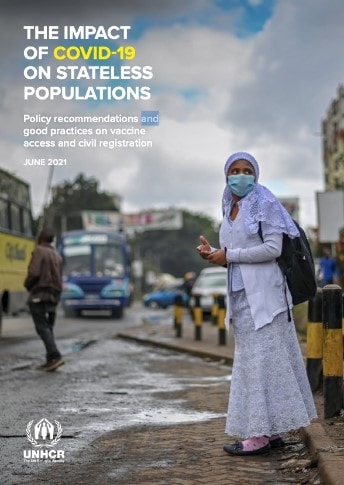
UNHCR (June 2021), "The impact of COVID-19 on stateless populations: policy recommendations and good practices on access to vaccines and civil registration." This policy brief details information, recommendations, and good practices at the global level, specifically on access to vaccines and civil registration. This publication follows the previous publication: "May 2020 Policy Brief on the Impact of COVID-19 on Stateless Populations."
Together We Can: The impact of COVID on the stateless population, a roadmap for change
A new impact report documents the multiple and forceful impacts of the COVID-19 crisis on stateless populations globally, highlighting how statelessness continues to be an "invisible" issue for actors with responsibilities to protect, promote, and realize human rights. The report was collectively written by the COVID-19 Consortium, initiated by the Institute on Statelessness and Inclusion (ISI) and currently working in 13 countries around the world. It highlights a series of issues that stateless persons and those at risk of statelessness face during pandemic times, the steps to address these issues, and the impacts achieved.
The report shows that change is urgent. Rights violations faced by stateless populations have been aggravated by the pandemic, to the point that they now carry life-or-death implications. The fragile legal status and lack of documentation of stateless persons lead to the denial of their rights to health services and government support at the very moment when they need them most. Xenophobic narratives have been crafted to blame and scapegoat stateless persons for the effects of the pandemic. Finally, the report reveals that governments, the United Nations system, and other agencies have not sufficiently prioritized the stateless community nor shaped their policies to address the problem.
Soon, OBMICA will publish on its website a Spanish translation of the most important chapters of this report. For now, we leave you with the headlines of five key points on statelessness revealed in the report.
Five things you should know about statelessness and COVID-19
- Stateless people are more likely to be excluded from COVID-19 responses, assistance, health care, and vaccines.
- Stateless people are denied their rights, arbitrarily detained, and subjected to xenophobia and hate speech to a greater degree in the COVID-19 context.
- COVID-19 brings to light the structural discrimination (invisible) that stateless people have always suffered.
- State responses to COVID-19 are creating new risks of statelessness as registration and other key activities stall.
- COVID-19 presents a unique opportunity to increase visibility, address the structural causes of statelessness, and secure lasting change by working directly with stateless persons and being accountable to them.