
Launch of the MigraSalud Project
On March 17, 2023, the launch of “MigraSalud: Protecting the right to health from the local to the national level in the Dominican Republic” took place at the Sheraton Hotel. This project promotes access to quality medical services for the most vulnerable groups in the country through active participation, advocacy for the right to health, and the production of evidence-based knowledge.
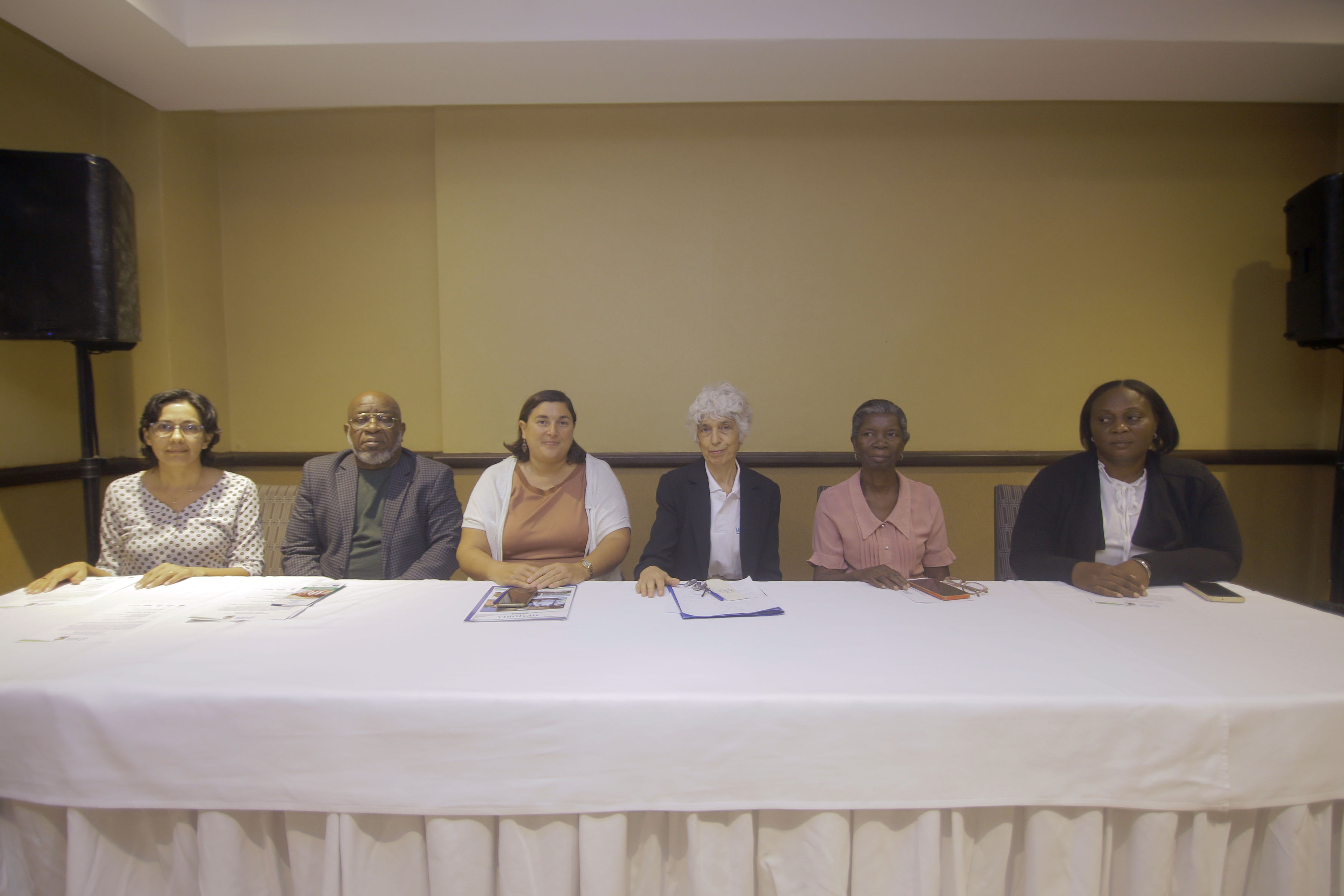
On March 17, 2023, the launch of "MigraSalud: Protecting the right to health from the local to the national level in the Dominican Republic" took place at the Sheraton Hotel. This project promotes access to quality medical services for the most vulnerable groups in the country through active participation, defense of the right to health, and the construction of knowledge based on evidence.
From left to right: Sister Maria Eugenia Vazquez, Director of the Scalabrinian Association at the Service of Mobility (ASCALA); Joseph Cherubin, Director of MOSCTHA; Maria Gonzalez Mata, Head of Cooperation of the European Union in the Dominican Republic; Bridget Wooding, Director of the Observatory for Caribbean Migrants and Social Development; Sirana Dolis, Coordinator of the Movement of Dominican-Haitian Women (MUDHA); Rosibelis Charleston Sanelis, lawyer at the Center for Sustainable Development (CEDESO).
The MigraSalud initiative is led by the Observatory for Caribbean Migrants and Social Development (OBMICA) in collaboration with three emblematic Dominican civil society organizations with broad social-service trajectories: the Center for Sustainable Development (CEDESO), the Scalabrinian Association at the Service of Human Mobility (ASCALA), and the Movement of Dominican-Haitian Women (MUDHA). It is funded by the European Union through the European Instrument for Democracy and Human Rights (EIDHR), which derives from the Human Rights and Democracy thematic program of the Neighbourhood, Development and International Cooperation Instrument (NDICI).
Sirana Dolis, director of MUDHA, delivered welcoming remarks at the event, highlighting the importance of gathering objective data for the design of public policies that reflect the reality of communities. She emphasized the role that civil society organizations working in the territories, providing support to the population, and organized citizenship can play in synergy with governmental actors as a bridge to achieve the common objective of guaranteeing timely and universal access to quality services, taking into account that age, economic situation, and geographic location make a great difference among users of the health system.
For her part, the head of Cooperation of the European Union in the Dominican Republic, Maria Gonzalez Mata, underscored the importance of civil society organizations in the promotion and protection of human rights, which are fundamental to guaranteeing long-term stability, security, and sustainable and inclusive development. She also stated that this type of project aligns with European Union values such as democracy, the rule of law, and respect for human rights, including the rights of persons belonging to minorities. Finally, she positively assessed innovative ways of generating alliances to address the challenges that limit ownership of the right to health, and she recalled that during the COVID-19 pandemic these were crucial in demanding universal access to vaccines.
OBMICA Director Bridget Wooding was responsible for presenting the action lines of the MigraSalud Project, which includes a rights-based approach and gender perspective, taking into account different national and international instruments covering the determinants of health, such as availability, accessibility (non-discrimination), acceptability, and quality. In addition, MigraSalud draws on the UN roadmap for COVID-19 recovery, in which the Dominican Republic is very well positioned due to the authorities' effective management of the pandemic response.
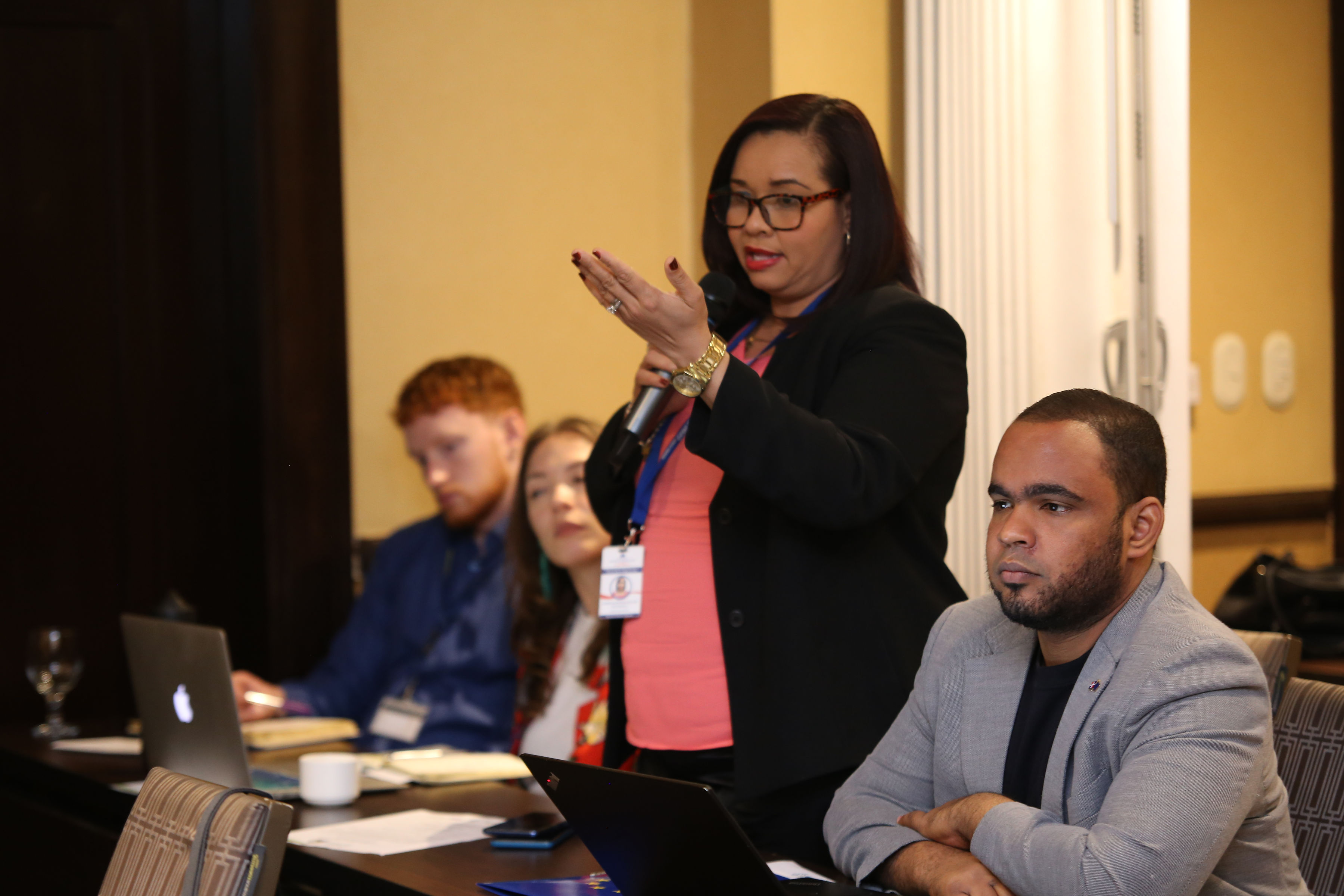
Jazmin Martinez, head of the vulnerable populations program, Ministry of Health
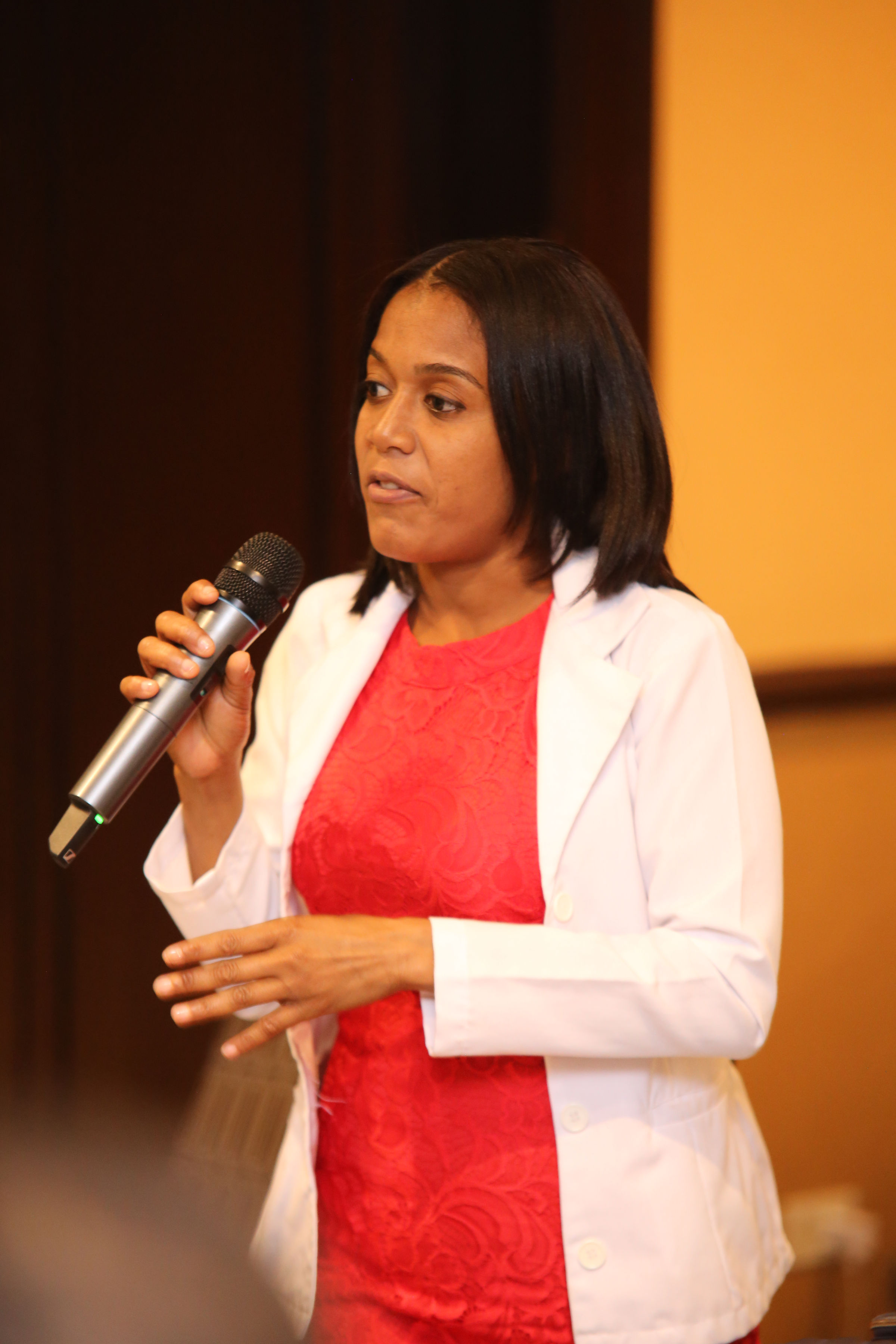
Martina Moreno, nurse at the Mata Mamon Primary Care Center (CPN)
Key points
MigraSalud aims to strengthen the rule of law and respect for human rights in the Dominican Republic, contributing from a gender perspective to greater inclusion in the public health system for people in situations of vulnerability in the country, migrants and their families with roots in the country, who face a series of barriers when exercising their right to health.
Where is it implemented?
The project focuses on three main geographic areas: Bahoruco, San Pedro de Macoris, and Greater Santo Domingo. It prioritizes work with the hardest-to-reach populations, such as people in vulnerable situations, people in extreme poverty, people in mobility, agricultural workers, isolated communities, and people with specific needs, so that their experiences and points of view are integrated into public policies and community interventions. It seeks to empower individuals and communities through training and participation, and access to information so that they know their rights and responsibilities and can assume an active role in policymaking, in actions to identify and address health inequities and their social determinants.
Activities
Explore, learn, and share are the three pillars on which MigraSalud's activities will be developed. Field monitoring will be carried out, as well as the socialization of findings and exchange of experiences among stakeholders, community training sessions to promote active citizen participation, communication campaigns on access to quality health for collective benefit, and the production of educational materials.
The innovative aspect of this proposal is that it adds to this tradition of research for action the methodological approach of community-led monitoring (CLM), in which the basis of the research, the primary sources, is generated by the very people affected, for whom the action seeks to produce a positive impact.
An additional benefit of community-led monitoring is that it offers a structure and a mechanism through which community data can have a tangible and sustainable impact on service quality, when shared strategically with decision-makers.
Finally, it is no less important to influence public opinion regarding its perceptions of migrants, so a study will be carried out of the narratives that exist in the media and in official discourse about migrants and their families who seek health services in the Dominican Republic, especially in a changing post-COVID recovery context.
In addition, the question-and-answer session offered an opportunity to review the current situation together with different health-sector professionals invited to the event, and to address possible challenges during the implementation of the project, such as the way authorities deal with undocumented users who seek health services. The exchange made it possible to clarify that, while all patients are treated in emergency areas of health centers whether or not they have documents proving regular residence in the country, the quality of service is not always the same depending on whether they possess documents. It was also recognized that lack of documentation is a factor that complicates patient follow-up, and that many migrants do not have health insurance, which is a challenge for access to health, especially for the purchase of medicines or admission for surgical operations. Finally, it is expected that the various studies carried out during the action will make it possible to envision alternative mechanisms for identifying people in irregular migration situations with a view to facilitating referrals and building the medical history of these patients.
Connecting vulnerable communities
During the closing session, ASCALA Director Sister Maria Eugenia Vazquez highlighted the positive impact of the project, which has generated great enthusiasm among the implementing organizations: "What for many people and communities is basic - medicines, infrastructure, access - for us, in our experience in disadvantaged communities, continues to be a challenge. All of this requires listening carefully, hearing and responding to their needs and demands, involving populations in decision-making and in the implementation of solutions." She finally expressed confidence in the opportunities opening up to improve practices, learn from experiences, and identify the barriers preventing these vulnerable populations from enjoying quality healthcare. She also recognized the presence of Dr. Joseph Cherubin at the event, as a pioneer, from MOSCTHA, in advocating the necessary attention to health as a right for hard-to-reach populations.