
The Regularization of Domestic Work in the Dominican Republic: A Major Achievement That Brings New Challenges
By Masaya Llavaneras Blanco, PhD. September brought the good news that domestic work in the Dominican Republic is being regularized after more than three decades of trade union and feminist struggle.
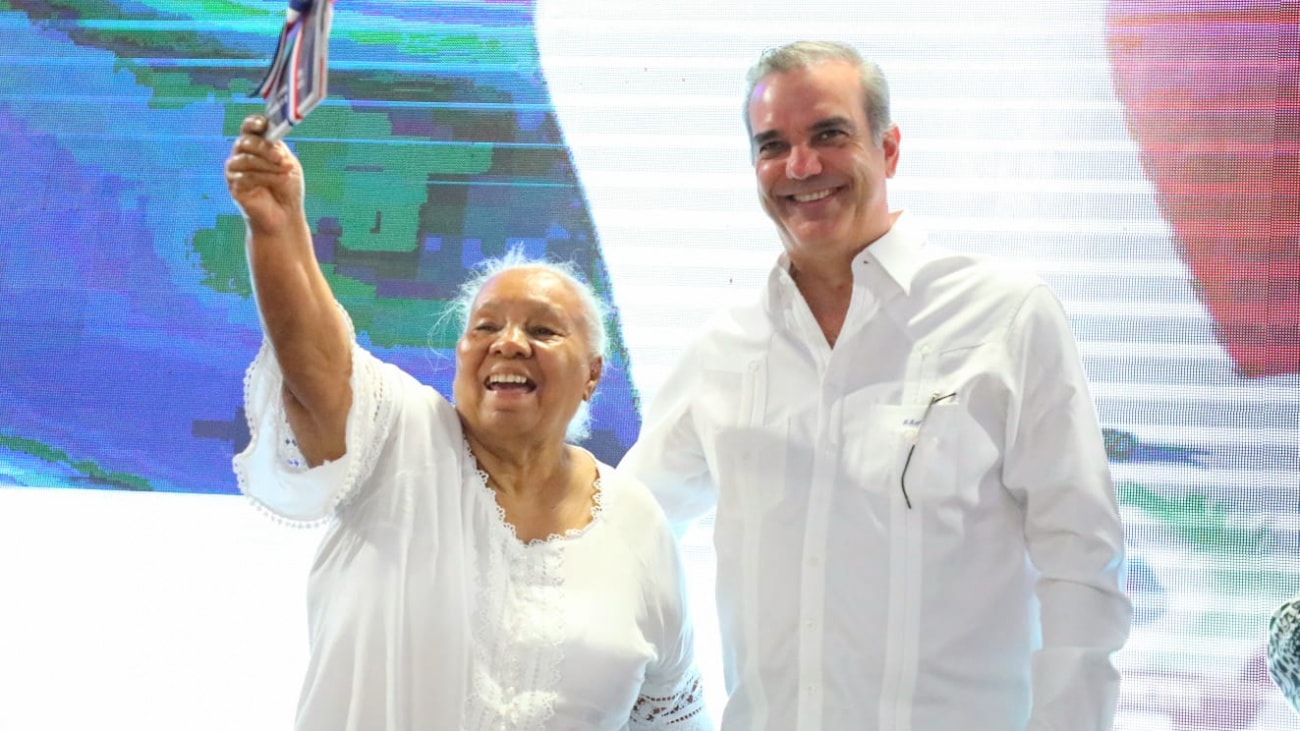
The month of September brought the good news that domestic work in the Dominican Republic (DR) is being regularized after more than three decades of trade-union and feminist struggle. On August 25, Resolution 14-2022 of the Ministry of Labor on the adoption and harmonization of measures aimed at improving compliance with Convention 189 of the International Labour Organization (ILO) was published.
The Resolution is articulated with two other resolutions: CNS 11-2022 of the National Wage Council on the minimum wage for paid domestic work, and 551-08 of the National Social Security Council. These legislative advances respond to a historic debt of the Dominican state toward domestic workers and address key demands of the labor movement. For example, a minimum wage is established for the sector (10,000 pesos per month), a maximum number of working hours per week is set (44), written contracts are required, and domestic workers are incorporated into the Subsidized Contributory Regime of the Social Security System, among other things.
These legislative changes represent major progress in response to a historic struggle led by domestic workers, who began mobilizing around the discussion of the 1992 Labor Code. This mobilization regained strength around the signing of ILO Convention 189 on domestic workers in 2011, which the Dominican Republic ratified in 2015. One of the innovations of the labor movement at that time was the inclusion of migrant workers in the struggle for the rights of all domestic workers regardless of migration or citizenship status.
Inclusion of migrants
One of the challenges arising from the historic achievement of Resolution 14-2022 is guaranteeing the exercise of these rights by migrant domestic workers. This challenge comes from various fronts because, although ILO Convention 189 includes this sector, the way it does so is difficult to apply in contexts such as the Dominican Republic, where migrant domestic workers do not arrive in the country with a migration category specific to that labor sector. That means the specific conditions of migrant domestic workers in the DR must be taken into account.
By 2022, 5% of domestic workers in the DR are Haitian migrants (FLACSO 2022), and according to the 2017 National Immigration Survey (ENI 2017), domestic work is the third most representative occupation among Haitian migrant women active in the labor market. In the case of Dominican women of Haitian descent, domestic work is even more important, being the second most representative occupation among active Dominican women of Haitian descent in the labor market. For this sector, access to documentation will represent a significant challenge when registering a contract with the Ministry of Labor. Those workers who do have a passport or identity card may still hesitate to register their data, given the recent waves of detentions and deportations without due process, or out of fear that their documents may be invalidated.
Workers without documents
For workers who do not have access to a passport or identity card, the challenge will be greater, since drafting the contract and registering it with the Ministry of Labor requires copies of the identity documents of both the employer and the worker. In this regard, it is worth emphasizing that many times the lack of documents is precisely what limits this sector of the population's options for work and education, leading them to resort to domestic work as one of the few occupations in which they can work and earn income.
Gap at the border
As we have pointed out on other occasions (OBMICA/FES October 2018), the reality of cross-border workers also brings specific challenges that must be taken into account. These are workers who live in Haitian border towns, such as Ouanaminthe or Anse-a-Pitres, and work in Dominican border towns such as Dajabon or Pedernales. For this sector, getting to work means crossing the border every day without a migration category that guarantees them a minimum level of protection. Although the Regulation (Decree 632-2011) implementing the General Migration Law 285-04 establishes the category of Border Resident to regularize the mobility of workers who live on one side of the border and work on the other, this category has not been implemented.
Moreover, up to now the category is limited to regularizing mobility associated with trade and does not protect other labor sectors important to the border economy, such as services, including domestic work as well as construction and agriculture. Although there is a Pilot Plan for implementing this migration category in Pedernales (DGM-09-2021), it has not yet been carried out. Implementing this category, and potentially expanding it, may be a viable way to facilitate the exercise of labor rights by cross-border domestic workers.
Resolutions 14-2022 of the Ministry of Labor, CNSS 551-08, and CNS 11-2022 represent important advances in the exercise of rights and the provision of care in the DR, and they are the fruit of years of mobilization by trade-union and feminist groups. The challenge now is to ensure that these advances are implemented in the most inclusive way possible, guaranteeing the exercise of rights to all domestic workers regardless of place of origin or migration or citizenship status.
Decent work crosses the Atlantic
Finally, we are pleased to note that there are new measures in Spain under which migrant women, including Dominican women, can benefit on equal footing with native women, and we hope that in the DR justice for migrant women will also become a reality.
"The expansion of rights for the group of domestic workers approved this Tuesday by the Government will affect around 400,000 people, the vast majority of them women (and foreigners). Those who are registered with Social Security - trade unions estimate that 200,000 more work irregularly - will finally be able to contribute for unemployment benefits. It is a resolution that puts an end to labor discrimination recently recognized (and criticized) by European courts of justice." El Pais, September 7, 2022