The New York Declaration and the Global Compact Process 2016-2018
September 5, 2017. The so-called refugee crisis in Europe transformed migration policy by giving even greater prominence to the political dimension.
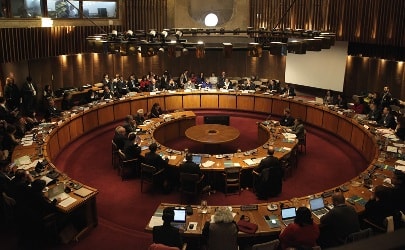
Eventually, a summit sponsored by the United Nations was held in September 2016, whose main outcome was the establishment of the political will of states to work to protect refugees and migrants while addressing emerging migration challenges.
It was decided to organize an intergovernmental conference in 2018 at which the global compact for safe, orderly, and regular migration would be presented for adoption by the states concerned. The commitments in the declaration included: protecting the human rights of refugees and migrants; regardless of status, ensuring that all refugee and migrant children receive education within the first months after arriving in the country of destination; condemning xenophobia toward refugees and migrants and supporting a global campaign to counter it; and supporting the positive contributions of migrants to economic and social development in host countries. In addition, it is significant that, in the context of the September 2016 conference in New York, the United Nations and the International Organization for Migration (IOM) agreed to establish “a closer relationship,” and the IOM has become a “related organization” to the UN.
In February 2017, the Special Representative of the Secretary-General (SRSG), Peter Sutherland, published the “Sutherland Report,” making recommendations to promote global migration governance that are relevant to the process of drafting the compacts. These recommendations include specific ideas for multilateral cooperation related to migrants in situations of vulnerability, improved opportunities for labor mobility, and effective and humane returns. Sutherland also addressed the issue of minilateralism and stressed the need to empower local governments by ensuring that they are included in the architecture of global migration governance.
Thus, after a period of proliferation and fragmentation in global migration governance, the launch of the compacts offers a way to better anchor migration within the UN system. Two factors underlie the increasingly aligned willingness of states from the global North and the global South to support a broader role for multilateralism in migration. On the one hand, the political importance of migration has become more pronounced. On the other hand, there is the process of learning and trust-building derived from subregional dialogues over the last two decades. For virtually the first time, states are willing to discuss the human rights, security, development, and governance dimensions of international migration within the UN framework.
The first regional consultation: the Americas
“It borders on a miracle,” concluded a senior UN official on August 31 in Santiago de Chile, praising the reality of the process undertaken to arrive at global compacts. This is because states have traditionally prioritized their sovereignty at the expense of joint policies among states to address the complexities of migration dynamics. Within the framework of this new global process, five regional consultations are planned, beginning in the Americas. OBMICA was invited to participate in this first consultation in Chile in August.
The meeting reviewed three key reports: on South America, Mexico/Central America, and the insular Caribbean. OBMICA's Director served as commentator on the document addressing the challenges facing the latter region.
Key actors involved in the process were present, including IOM Deputy Director General Laura Thompson and Louise Arbour, Special Representative of the Secretary-General for International Migration and Secretary-General of the intergovernmental conference.
Two people from the Dominican Foreign Ministry took part from Santo Domingo. In addition to the geographically focused reports, panels were also developed on weighty migration issues. Topics debated included the following:
- The human rights of all migrants, social inclusion, social cohesion, and the fight against all forms of discrimination such as racism, xenophobia, and intolerance.
- The response to the factors driving migration, including the adverse effects of climate change, natural disasters, and man-made crises, through protection and assistance, sustainable development, poverty eradication, and conflict prevention and resolution.
- International cooperation and migration governance in all its dimensions, particularly at borders, in transit, entry, return, readmission, integration, and reintegration.
- The contributions of migrants and diasporas to all dimensions of sustainable development, including remittances and the portability of earned benefits.
- The smuggling of migrants, trafficking in persons, and contemporary forms of slavery, especially the identification, protection, and appropriate assistance to migrants and victims of trafficking.
- Irregular migration and regular pathways, including decent work, labor mobility, recognition of skills and qualifications, and other relevant measures.
Given the fragmentation that has characterized the evolution of migration governance on a global scale over recent decades, the global compact process is timely. This fragmentation has had both positive and negative implications for cooperation. At times it has allowed “coalitions of the willing” to refine an agenda before bringing it into the United Nations system. On other occasions, it has offered states opportunities to sidestep pre-existing multilateral mechanisms. Ultimately, the global compact process is an opportunity to reconcile these uneven developments and seek a much-needed coherence.
In this context, it is necessary for the insular Caribbean to strengthen an inter-state dialogue mechanism, as has existed for South America and Mexico/Central America for decades, with the support of IOM and other key actors, in order to improve its cohesive participation on the regional and international stage.