The unfinished task of women's rights in the Dominican Republic
Following the publication of the country report prepared by the Committee on the Elimination of Discrimination against Women (CEDAW) in late February 2022, a group of civil society organizations voiced concern that women's needs continue to lag behind on the government agenda, a situation reflected in rising discrimination, unemployment, low wages, gender-based violence, and limited
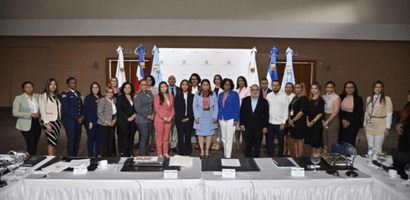
Following the publication of the country report prepared by the Committee on the Elimination of Discrimination against Women (CEDAW) in late February 2022, a group of civil society organizations voiced concern that women's needs continue to lag behind on the government agenda, a situation reflected in rising discrimination, unemployment, low wages, gender-based violence, and lack of access to safe reproductive health services.
In the box below we underline CEDAW's recommendations regarding Dominican-Haitian women and migrant women.
- Dominican-Haitian and migrant women: the Committee expressed deep concern over the recent mass deportations of Haitian women and women of Haitian origin, particularly pregnant and postpartum women, as well as the separation from their children born and/or raised in the country. It also drew attention to discrimination and the increase in gender-based violence against them, as well as the lack of access to justice. The organizations demand that the government stop mass deportations and family separations and guarantee all Dominican-Haitian and migrant women the protection they need against the discrimination and gender-based violence they face. They agree with CEDAW's recommendation to grant permanent residence permits to Haitian women whose children were born and raised in the State party in order to uphold their right to family life, in accordance with international conventions and standards.
In addition, CEDAW issued a series of recommendations on cross-cutting issues, including the following:
- Employment: The Committee expressed concern over the persistent wage gap between men and women, the underrepresentation of women in the formal economy and in decision-making positions in the public and private sectors, and the need for wages to comply with the principle of equal pay. In line with the Committee's recommendations, the organizations demand the promotion of formal employment, the review of equal pay for equal work, and accelerated representation of women in decision-making posts. They also call for a minimum wage, benefits, and adequate conditions for domestic workers. The latter include Haitian migrant women and women of Haitian descent who often do not have written contracts.
- Gender-based violence: Despite the adoption of certain measures, the Committee drew attention to the high rates of violence against women and the delay in adopting the Law on Violence Against Women, which would criminalize femicide, as well as the lack of access to justice for victims and/or their relatives. The organizations demand the prompt adoption of the comprehensive law on gender-based violence and that all women, without discrimination, be guaranteed access to justice and to the resources available for their protection.
- Sexual and reproductive health services: The Committee expressed concern over limited access to information on sexual and reproductive rights, especially among young people; the lack of access to safe abortion and post-abortion services, one of the leading causes of maternal mortality in the country; and the opening of criminal proceedings against women who have accessed abortions on their own. The Committee drew attention to discrimination in access to health and sexual and reproductive health services for migrant women. The organizations call on the government to guarantee the availability of contraceptive methods for women who need them, without discrimination; review and halt criminal proceedings against women who have accessed this health service; and approve the three exceptions in the Penal Code so that women can access abortion under safe conditions.
The organizations that appeared before the United Nations Committee that monitors compliance with the Convention on the Elimination of All Forms of Discrimination against Women, to which the Dominican Republic is a State party, are: Coalition of Civil Society Organizations; Coalition of Women with Disabilities; and, with regard to migrants and their descendants: the coalition "All rights for all women": Movimiento de Mujeres Dominico-Haitianas (MUDHA), Movimiento Socio Cultural para los Trabajadores Haitianos (MOSCTHA), Dominican@s por Derecho, and the Jacques Viau Dominican-Haitian Encounter Network.