
Guerline Jozef and the Haitian Bridge Alliance
OBMICA highlights the Haitian Bridge Alliance through an interview with its director Guerline Jozef. What is HBA's mission? HBA's mission is to serve Black communities from the Caribbean and to empower and elevate the causes of Black immigrants. In January 2021, HBA, together with the Institute for Women in Migration (IMUMI) and the Center for Gender and Refugee Studies (CGRS), published the report 'A Journey of...'
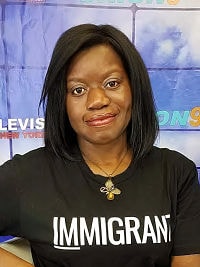
OBMICA highlights the Haitian Bridge Alliance through an interview with its director, Guerline Jozef.
What is HBA's mission?
HBA's mission is to serve Black communities from the Caribbean and to empower and elevate the causes of Black immigrants.
In January 2021, HBA together with the Institute for Women in Migration (IMUMI) and the Center for Gender and Refugee Studies (CGRS) published the report "A Journey of Hope: Haitian Women's Migration to Tapachula, Mexico." Can you tell us what motivated this report?
The report was motivated by the need to better understand the journey of Black migrant women, specifically Haitian women.
Can you describe the typical obstacles Haitian migrants face on the journey from South America to Mexico?
It begins with the fact that they travel as Black people. Traveling in their own Black bodies creates an additional layer of vulnerability for Black migrants, whether they come from Haiti or from Africa. In every country they try to cross, they have to deal with obstacles such as:
- Not being able to blend in or pass as native people in South and Central America (the moment Black immigrants enter a town, everyone knows they are immigrants);
- Generally lacking access to the Spanish language, even if some Haitians speak some Spanish; and
- Racism against Black people.
This generates many extremely painful stories: women being raped and people being shot, people going missing, truly painful stories that we hear from people who barely manage to survive at the end of the day. Traveling in one's own Black body makes you a target. These Black migrants are subjected to violence and deception because others know they have no resources. They can do whatever they want, whenever they want, to Black immigrants and nothing will happen.
Can you speak about this label of "economic refugees" that is often given to Haitian refugees?
One of the biggest misconceptions is that Haitians are economic refugees. First of all, if we look back 30 or 40 years, most people who left Haiti did so because of political persecution and that had nothing to do with economic instability. And the mass migration that occurred in 2010 was the result of the earthquake that killed more than 250,000 people and left millions completely hopeless, creating displacement due to a natural disaster. Among those seeking protection, many people continue to flee because of political turmoil. I cannot tell you how many people, among those we interview, when we hear their stories we realize that their case is a political case, a case of domestic violence, sexual abuse, or LGBTQIA violence.
 Because of this narrative that Haiti is a poor country, without giving any context as to why Haiti is a poor country, there is this conformist statement that all Haitian asylum seekers, refugees, and migrants are economic refugees. That is false because we can point to politics, climate change, sexual orientation, violence against women, and all the different reasons why people are leaving. And because when we hear "Haiti," we have this socioeconomic narrative, it is deeply unfair because once people apply that label, they disqualify Haitians from any kind of aid or protection they should receive under international law.
What are some of the ways people can work to help remove the barriers Haitian migrants face?
- Educate themselves and educate people within the movement and within different administrations.
- Highlight the stories of Haitian asylum seekers, refugees, and migrants.
- Take the time to listen to those people and advocate with and on behalf of them in order to dismantle the myths that have been used against Haitians for so long.
That is why we are pushing for people to understand those realities, and that is why we continue organizing, advocating, and trying to find ways to change the system that focuses on all migrants but specifically on Haitian migrants.
Can you describe how Biden's inauguration has affected the situation of Haitian migrant women in Tapachula?
Biden, after taking office, has done nothing for Haitian migrants; we are seeing the continued deportation and expulsion of Haitian migrants, including pregnant women and babies just a few months old. That is why we are pressing Biden and the administration to be accountable for Black migrants, for Haitian migrants. Enough! It is time for care and protection to be provided to Black migrants, to Haitian migrants, with the understanding that Haitians have been migrating to the United States for a long time and have contributed enormously to U.S. society since its very foundations. Haitian blood seeps into the soil of the United States.
Therefore, it is mind-boggling to see how the United States continues treating Haitian migrants and asylum seekers in 2021. We have been part of this country and we have paid the price. Sometimes it is frustrating to have to keep defending Haitian and Black immigrants, to keep saying that immigration is a Black issue. It is exhausting that we, as Black immigrants, have to keep raising our rights by demanding equal protection for Haitian immigrants and keep explaining the contributions of Haitian immigrants in this country.
Can you tell us about HBA's response to Biden's current policy of deporting and expelling asylum seekers and Haitian migrants on a mass scale, including pregnant women and those who have recently given birth, from the United States to Haiti?
We have been fighting to stop deportation and expulsion under Title 42 since March 2020, under President Trump, when he used Title 42 as a weapon and literally dismantled the asylum process, closed the border, revoked visas, and enacted the Migrant Protection Protocols (MPP) and the third-country asylum agreement, among others. While President Biden is actively working to undo some of those policies, we see that Title 42, the one policy that literally eliminates any access to asylum, is being reinforced. We have been pressing the Biden administration to stop those deportations and expulsions, and we are all working behind the scenes to create a fair and welcoming immigration system. We will continue to push until everyone is protected and received with dignity. HBA is at the forefront of the fight for all immigrants, but specifically for Black immigrants, because we understand that it is important to keep elevating the stories of Black immigrants within the administration and the immigration system to make sure Black immigrants are not forgotten yet again.
Do you have anything to add that might be useful for migrant-rights activists in the Dominican Republic?
Whether in the Dominican Republic, The Bahamas, Mexico, or the United States, the struggle of Haitian migrants is basically the same: it is the struggle for dignity and respect. Understanding that, as creators of freedom and liberation in the Americas and around the world, we continue to pay the price. We understand how the West plays a major role in the way people view Haitians, in misunderstandings and misinformation; the system was created to trap people into behaving negatively toward Haitians. What people do not understand, in the Dominican Republic and elsewhere, is that unless we create a system in which we respect each other and recognize that Haiti fought for the freedom of all those people, we will continue to have this back and forth.
We have to understand that this is a trap. It is a trap for the Dominican Republic and for any country where Haitians are found to view Haitians negatively as unworthy, poor, lesser than, when the reality is that we know, and everyone knows, that the struggle for freedom and liberation began with Haitians. The system was created exactly to be the way it is because if Haitians were respected, it would mean that all people of African descent would be valued and respected. People often do not understand how their own identity is related to Haiti. Haiti is the only country that granted citizenship to Jews fleeing Eastern Europe. That is Haiti, that is the place Haiti should continue to hold throughout the world, but the West will not allow it.
Haitian Bridge Alliance website: https://haitianbridge.org/