Meeting in the Cibao with Community Leaders on Accompaniment for Mixed Couples
November 24, 2017. The Observatory for Caribbean Migrants and Social Development (OBMICA) led this Friday, November 24, in Santiago, the first regional meeting with technicians and community leaders from Santiago and Dajabon and other areas of the Cibao region to share experiences and strengthen recommendations regarding legal accompaniment for mixed couples
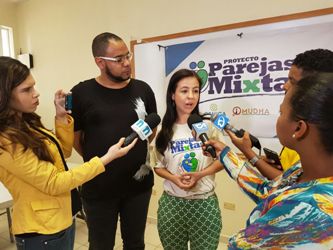
November 24, 2017. The Observatory for Caribbean Migrants and Social Development (OBMICA) led this Friday, November 24, in Santiago the first regional meeting with technicians and community leaders from Santiago and Dajabon and other areas of the Cibao region, to share experiences and strengthen recommendations regarding legal accompaniment for mixed couples.
The workshop-course, convened with the support of the Network of Social Centers of the Society of Jesus, was held in the province of Santiago de los Caballeros and forms part of the activities contemplated within the framework of the Mixed Couples Project. It was facilitated mainly by Natalia Riveros, project coordinator, and included the participation of Dominique Rincon, a lawyer with broad experience and knowledge regarding access to the Dominican civil registry from a rights-based and gender perspective.
Through this space, the 18 members of the participating organizations contributed further evidence that serves advocacy toward a solution, and also as support inputs for the drafting and validation of a manual or protocol for assisting mixed couples that OBMICA is currently preparing.
“We want to draw attention to the fact that many of these people who should have timely access to the civil registry, which is the gateway to other rights, still do not have their Dominican civil registration as they should, due to many obstacles we have identified, such as lack of information and certain inconsistencies in what the laws and current procedures say on the part of the actors involved,” Natalia Riveros explained to the press covering the activity.
Since September 2014, OBMICA together with the Movimiento de Mujeres Dominico-Haitianas (MUDHA) has been implementing a process of identification and legal accompaniment for sons and daughters of Dominican-Haitian mixed families from eight batey communities in the outskirts of Santo Domingo. The children of mixed couples, Dominican persons joined with foreign persons, have an unquestionable right to Dominican nationality by being the children of a Dominican father or mother, although their access to civil registration continues to be obstructed.
At its inception, the collaboration on the issue of mixed couples received financial support from Canada, and since February 2015, the work has continued as one of the components included in a 3-year project, “Migrants, descendants and children of mixed couples: Defending human rights through research for action,” funded by the European Union (EIDHR/2015/371-237). In the current phase of implementation of the project, the aim is to complement and share what has been learned so far, through exchanges with other organizations working in geographical areas different from those covered by the project and which are strategic because of their concentration of immigrants and descendants born in the country.