
OBMICA Newsletter Editorial December 2024
By the close of 2024, human mobility in the region had become ever more politically charged and physically dangerous. This became clear when President Nicol?s Maduro claimed reelection and tightened measures against his opponents. Today, Donald Trump's return to power points to the possibility of mass deportations and a hard line along the Rio Grande.
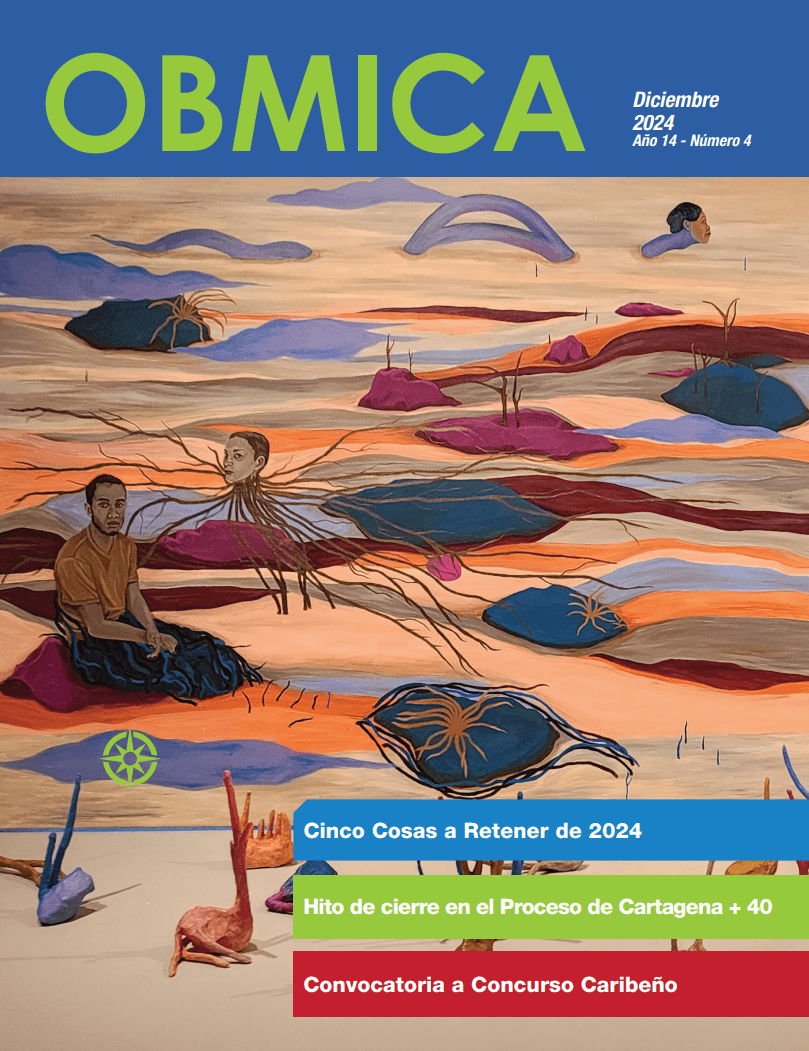
As 2024 comes to a close, human mobility in the region is becoming increasingly politically charged and physically dangerous. This was underscored when President Nicolas Maduro claimed re-election and intensified measures against his opponents.
Today, Donald Trump's return to power points to the possibility of mass deportations and a hard line along the Rio Grande. This type of barrier in other countries may deter some potential migrants, but there are many reasons why people still set out on the journey. These are factors that may worsen in several hot spots. It is very possible that the most significant increase in 2025 will be people fleeing Venezuela. So far this decade, more than 7 million people have formed a remarkable exodus. After Mr. Maduro's inauguration in January, the exodus may continue, especially if President Trump pursues economic sanctions. Most Venezuelans who have left their country since 2015 have remained in the Americas. In addition, Haiti remains at the mercy of gangs despite the arrival of an international force led by Kenya that is seeking to restore peace. Cuba's economy is under severe strain, even by its own standards. Cubans and Haitians are still trying to reach the United States, although in the last decade new destinations have emerged in South America. More Ecuadorians are seeking to leave their country because of gang violence. In El Salvador, despite President Nayib Bukele's heavy-handed policies, a wavering economy may continue to drive migration.
Extracontinental migration by Chinese, Indian and African nationals is also trying to reach the United States by flying into the region and then continuing northward. Regardless of promising new cooperation frameworks such as the Chile Plan (see page 3 of this bulletin), many governments in the region may accelerate tougher policies toward people on the move in 2025. In Panama, the new government is less friendly to migrants arriving through the Darien Gap from Colombia and is increasing deportation flights. Chile will hold elections in 2025 with the possibility of shifting further to the right, encouraging more barriers to immigration. In Canada, the Conservatives, who have promised to reduce immigration, are the likely winners in the 2025 elections. In short, the routes are constantly evolving. More migrants, especially extracontinental migrants, may fly to Managua to bypass the Darien Gap before heading north. Panama's hard line could push other migrants to take dangerous sea routes, relying on unscrupulous smugglers. At this point, we foresee more shadows than light in the coming year.