
OBMICA Newsletter Editorial December 2021
The narrative of the Haitian woman crossing the border to enter the Dominican Republic to give birth has been mobilized to militarize maternity wards, justify restrictions on access to reproductive health, and prohibit entry for ?visibly pregnant? women. Whether or not a border has actually been crossed in practice, this is what governs.
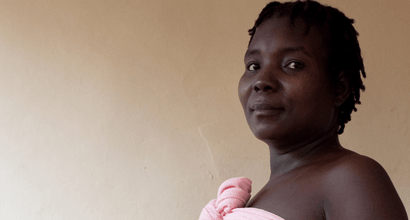
The narrative of the Haitian pregnant woman crossing the border to enter the Dominican Republic (DR) to give birth has been mobilized in order to militarize maternity wards, justify restrictions on access to reproductive health, and prohibit entry for "visibly pregnant" women.
Whether or not she has actually crossed a border in practice, that is what governs. When the Black mother, assumed to be an undocumented Haitian migrant, tries to register the birth of her child born in the Dominican Republic, the border appears through discriminatory administrative practices that she encounters in hospitals and registry offices located inside the country. Dominican officials act in the service of the State to forge the citizenship that political will chooses to protect. Babies born to racialized and feminized "others" are excluded, leading to the transmission of statelessness in a matrilineal manner.
This militarization of maternity wards used by Haitian migrant women dates back at least to 2017, when the National Migration Directorate (DGM) used the military to search for Haitian migrant women who were supposedly being trafficked into the country. The operation was called "Measurement of Haitian parturients at the national level" (DGM 2017). Multiple government agencies were involved: the Central Electoral Board, which provided Civil Registry information to the DGM, and the ministries of Defense, Public Health and Agriculture, as well as Customs and Drug Control departments. In August 2017, Defense Minister Ruben Paulino Sem sent the Army and the Specialized Corps for Land Border Security (CESFRONT) to work under "a new service modality" in public and private hospitals with a view to evaluating the women who arrive at those hospitals to give birth. The operation coincided with protests organized by the so-called Mesa Nacionalista outside two public maternity wards in Santo Domingo where many Haitian women and low-income Dominican women give birth. Nationalist factions within government and civil society have joined forces to guarantee that maternity wards become a place of migration control and that the intimate process of giving birth becomes a target for military intervention. Clearly, these maneuvers, several years ago, paved the way for even more restrictive policies and practices in the Dominican Republic since the end of September. In Clap When You Land (2020), Dominican author Elizabeth Acevedo tells the story of Camino, a young woman who lives in the Dominican Republic. When Camino's best friend, Carline, who is of Haitian descent, begins to go into premature labor, she is not taken to a hospital to give birth. As Acevedo briefly comments, the decision to have a home birth is a result of the enormous difficulties many Haitian women and women of Haitian descent encounter when giving birth in the Dominican Republic.
Bridget Wooding
Director of OBMICA