
Let Us Get to Know the Book Border of Lights and Its Editors
Academics Megan Jeanette Myers and Edward Paulino, creators of the Border of Lights movement, answered OBMICA's questions about the multilingual compilation that gathers testimony on the 1937 Massacre. Edward Paulino, PhD, is an Associate Professor in the Department of Global History at John Jay College (CUNY, NY), where he teaches the History of Genocide.
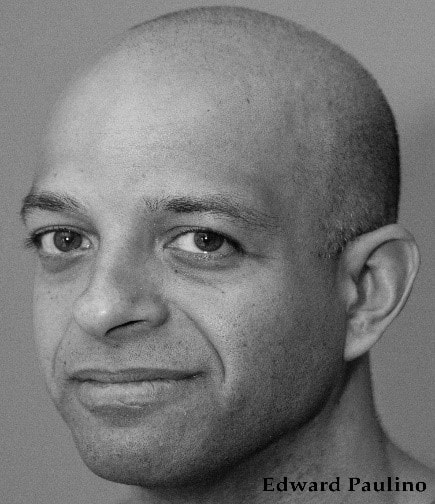
Edward Paulino, PhD, is an Associate Professor in the Department of Global History at John Jay College (CUNY, NY), where he teaches the History of Genocide. He is a co-founder of Border of Lights. Since 2014, he has written and performed his one-man show "Eddie's Perejil." Paulino is the author of Dividing Hispaniola: The Dominican Republic's Border Campaign Against Haiti, 1930-1961, published in 2014. In 2018, he wrote the script for the animated Ted Ed video series "Ugly History: The 1937 Haitian Massacre." Between 2015 and 2018, he was a Public Scholar for the New York State Council on the Humanities and is a Fulbright IIE alumnus and currently a Fulbright specialist. Paulino is also a board member of The Coalition for Immigrant Freedom, based in New York.
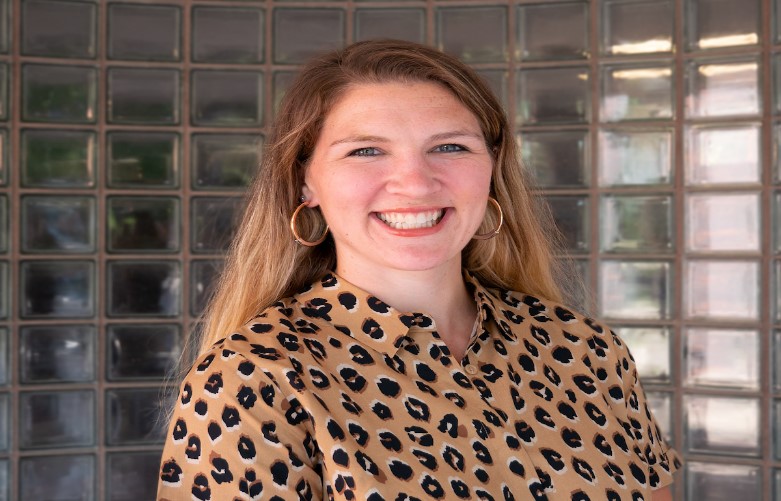 Megan Jeanette Myers is an associate professor of Spanish at Iowa State University. In 2019, Myers published Mapping Hispaniola: Third Space in Dominican and Haitian Literature with the University of Virginia Press. Mapping Hispaniola analyzes the ways in which Dominican and Haitian diasporas in the United States have imagined the physical and metaphorical border(s) that divide the island of Hispaniola. She has recently published in journals dealing with Caribbean and Latinx literature, including Hispania, Chiricu, Confluencia, and Caribe. In addition, Myers has an active research agenda in the field of the Scholarship of Teaching and Learning (SoTL) and community engagement and was a Compact Engaged Research Fellow on the Iowa campus in 2018-2019. For 2021-2022 Myers is a Fulbright scholar to the Dominican Republic and she is a co-founder of Border of Lights.
The co-editors kindly responded to the following questions from OBMICA.
Where did the idea of creating this Border of Lights reader come from?
The Border of Lights movement began in 2012 to commemorate, in October 2012, the seventy-fifth anniversary of the 1937 Massacre. The Border of Lights group has returned to Dajabon and Ouanaminthe for almost a decade, and the idea of creating this anthology arose at one of the first meetings on the Dominican-Haitian border. As academics, publications play an essential role in our professional environment, but from the beginning this collaborative Reader never existed within the limits of a traditional academic anthology. From the start, we dreamed of a compilation of diverse texts in multiple languages. Our dreams were surpassed when the opportunity opened for us to publish the Reader in open access format with Amherst College Press.
What do you hope to achieve with this multilingual compilation?
It is not only a multilingual compilation, but also a multi-modal and multi-perspectival one. The organization of the book reflects our editorial goal of making various communities and individuals of diverse genders, nationalities, races, and geographies bear witness regarding the 1937 Massacre. Even more, we tried to weave this set of voices together so that the perspective of a U.S. academic follows that of a Haitian journalist and so that the recording of a Dominican radio show precedes the testimony of a movement organizer, etc. Another essential goal of the anthology is based on connecting the massacre with other examples of anti-Black violence; the introduction opens a trans-hemispheric dialogue in order to incorporate the 1937 Massacre into the continuum of twentieth-century genocide history.
Let's talk about the name "Border of Lights." What does it refer to?
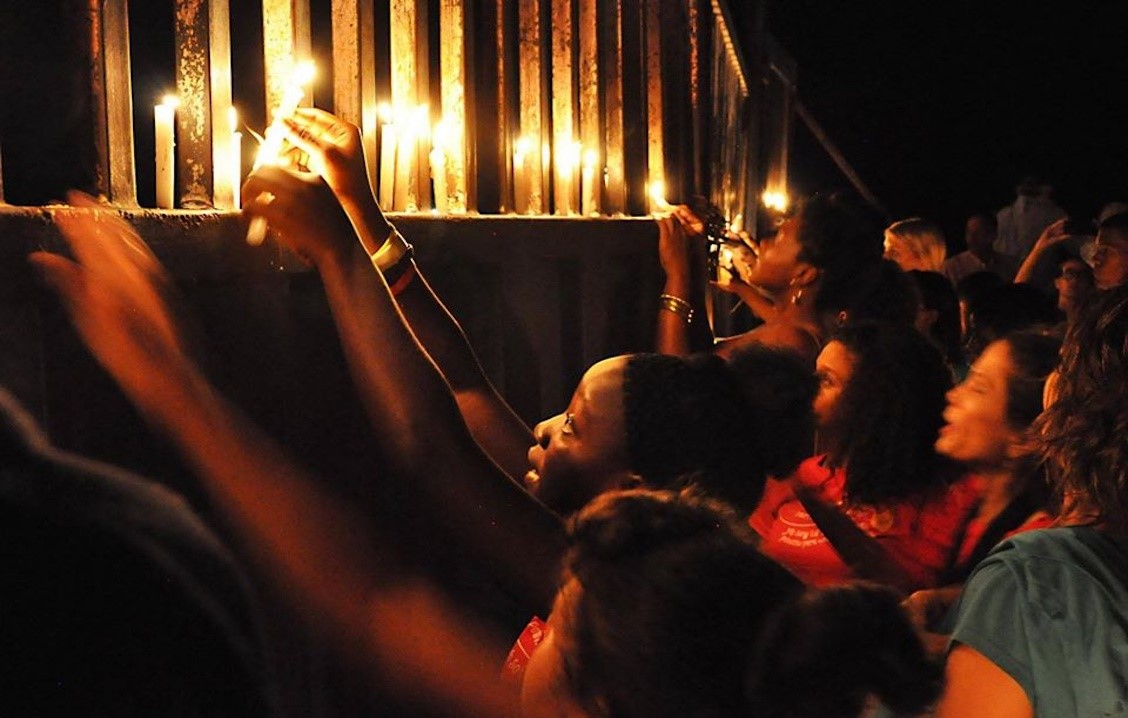
Border of Lights refers to the concept of illuminating the border and the history with clarity. We understood that there was darkness and a lack of interest in talking about the Massacre, the "cutting," or the "expulsion" of 1937. We understood that this history had been forged through indifference and, frankly, the legacy of fear that many residents still felt when remembering the crimes of the Trujillo dictatorship. By confronting this past through the local communities of Dajabon and Ouanaminthe, we wanted to shed light on a chapter of history through commemoration; thus the light at the border became a worthy historical memory to bear witness to the victims of this genocide.
How did you choose the participants in the project?
At the beginning of 2012, Julia Alvarez was on a promotional tour for one of her books, A Wedding in Haiti. A few months earlier Edward Paulino had already contacted her about how to coordinate an event on the border. Thus, in every city where Julia was, she met several of the people who would form the core of the founders of Border of Lights, particularly Cynthia Carrion and Sady Diaz. Participants gradually integrated into this group in an organic and decentralized manner. The collaborators of The Border of Lights Reader also joined little by little in the sense that all of them have some relationship with Border of Lights; most of them have participated in border events between 2012-2020 and some have contributed resources or materials to our website (www.borderoflights.org).
How long did it take to produce the book and what was the image-gathering process like?
The book, The Border of Lights Reader: Bearing Witness to Genocide in the Dominican Republic, was a long process and took around three and a half years from the beginning of the idea to gathering photos, inviting contributors, and submitting the final draft. In terms of image collection, this task took double the effort because in addition to choosing the photos we thought appropriate for the book, we also had to confirm permission from the photographers so we could publish them. One feels great pride after hard work in knowing that the editorial effort of assembling an interdisciplinary book was not in vain because the purpose of including not only texts but also images and recordings allowed us to achieve one of the principal goals of the project: to honor the victims and recognize that those lives mattered.
What are the plans for disseminating the reader in the context of important anniversaries in 2022?
The year 2022 will mark the 85th anniversary of the massacre and we are in the process of coordinating, together with our collaborators on both sides of the border (many of whom are contributors to the Reader), events for this very important commemoration. Together with other events such as members of a local orchestra playing Juan Colon's score "La Matanza de Haitianos: Movimiento I" (which appears in the anthology), we are also organizing a conference celebrating the publication of The Border of Lights Reader. The idea of that conference would be not only to share and disseminate the publication, but also to promote cross-border conversations and to invite border residents and members of the communities of Dajabon and Ouanaminthe to form a central and indispensable part of those dialogues.
The publication is freely available at the following link:
https://www.fulcrum.org/concern/monographs/1v53k057r