Meet Yoana Kuzmova
Yoana Kuzmova is a lawyer and defender of the human rights of migrants and stateless people. Originally from Bulgaria, she graduated from Vassar College and earned a law doctorate with distinction in international law from Boston University. She specializes in the study of the rights of non-citizens.
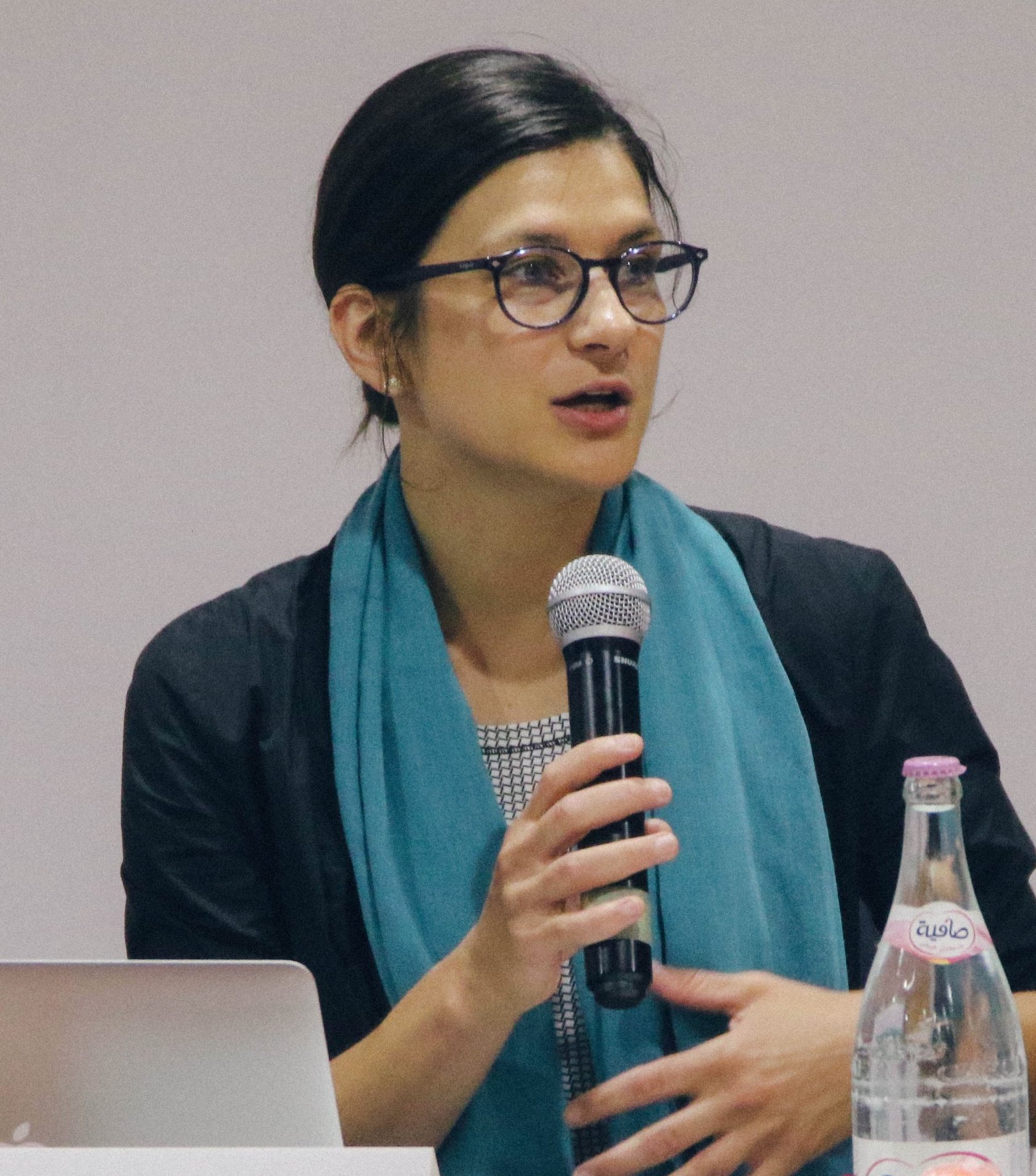
Originally from Bulgaria, she graduated from Vassar College and earned a law doctorate with distinction in international law from Boston University. She specializes in the study of the rights of non-citizens. She chairs the advisory board of the Network for Solidarity with Stateless People in the Middle East and North Africa (MENA). Her published work and academic interests revolve around nationality, national sovereignty, and the long-term consequences of forced migration for migrants and receiving countries. She is licensed to practice law in Massachusetts and New York and teaches at Boston University. Since September 2022, she has been an Associate Researcher at OBMICA.
Can you tell us about a project you are currently working on or have worked on recently?
Over the last three months, I joined the Trato Digno project of OBMICA and CEDESO. Within the framework of this project, I developed a study aimed at proposing a set of good practices for civil society organizations working to ensure that due process is applied in all migration procedures.
The study aims to synthesize the context of recent years and to base its recommendations on persistent trends in deportation policy in the Dominican Republic. These have changed little since the 1990s. This relative stasis can be observed despite important advances in terms of national legislation and international jurisprudence. In the last 10 years, important institutions such as the Ombudsman's Office were also created and strengthened.
The state has largely abandoned the letter and the spirit of Laws 285-04 and 169-14 and has replaced them with ad hoc policies that create insecurity for migrants, their descendants and families, and for the organizations that employ or support migrants.
What was the most interesting thing about that project and how does it apply to your professional practice?
The process of collecting data for the study enriched my perspectives on advocacy work and legal empowerment, as well as on the importance and difficulty of building a shared reality when it comes to migration in the Dominican Republic.
I was deeply marked by the time spent at the border with Haiti and in detention centers ("reception centers"), and by every opportunity to talk with people affected by deportations. I had the opportunity to speak with detainees in two centers. What struck me most was the informality of the detention and deportation procedure and the importance of timely, rapid interventions to ensure family unity and prevent people from being expelled from their own country. The organizations that make up the Dominican@s X Derecho platform have responded intelligently to these needs, given their experience accompanying people affected by Ruling 168-13, together with international organizations whenever necessary.
For me it was extremely interesting to observe the proactive participation of young people affected by Ruling 168-13. Their solidarity and courageous involvement in the defense of people vulnerable to deportation give me hope in this field. As a promoter of the rights of stateless persons in MENA, the example of these young Dominicans gives me great hope and ideas about how awareness among communities of defenders in that region can move forward.
Can you tell us about your experience as an associate researcher at OBMICA?
Each member of the OBMICA team has knowledge they were always willing to share with me. I felt integrated into and welcomed by the team from the first weekly meeting, and I appreciated the opportunity to enrich my understanding, which had been mostly academic, of migration between the Dominican Republic and Haiti with the wisdom each member of OBMICA could offer.
Without a doubt, the highlight was the seven trips in which I was able to participate in the south of the country. The work meetings and workshops organized with CEDESO, and the long hours spent in the vehicle in the process, gave me opportunities to talk through every aspect of my work and better understand the challenges encountered in attempts to promote full access to due process in migration procedures.