
Meet Jorgen Sorlie Yri
Jorgen Sorlie Yri is an associate professor at OsloMet and the University of Ostfold, both in Norway. He is also a Spanish teacher at the Norwegian Ministry of Foreign Affairs. A Norwegian national, he wrote his master's thesis in Latin American studies and his doctorate in history on different aspects of Dominican-Haitian binational relations.
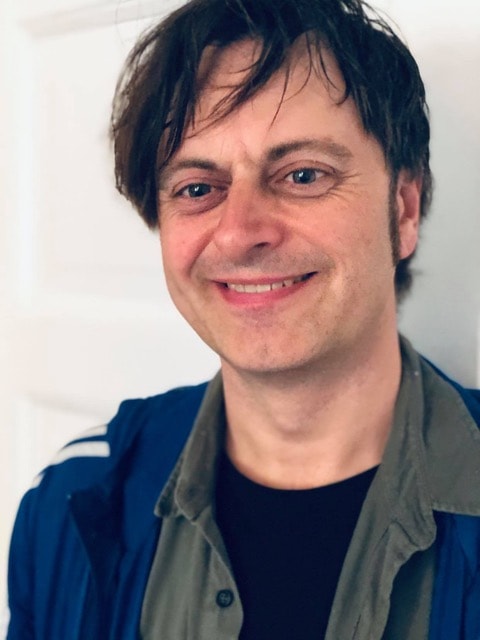
Jorgen Sorlie Yri
Associate professor at OsloMet and the University of Ostfold, both in Norway. He is also a Spanish instructor at the Norwegian Ministry of Foreign Affairs. He is Norwegian and wrote his master's thesis in Latin American studies and his doctorate in history on different aspects of Dominican-Haitian binational relations. OBMICA took advantage of his recent stay in the country to sit down and have the following conversation with him.
Can you tell us about a project you are currently working on or have worked on recently?
There are several projects right now, fortunately. We are organizing a panel for the conference of the Norwegian Association of Latin American Studies (NALAS), together with April J. Mayes and Edward Paulino, both friends of OBMICA, as well as two Norwegian researchers, Leiv Marsteintredet and Marianne Toraasen. We have titled the panel "Hispaniola 2023: global and transnational connections to an insular crisis," and I think it will be an important contribution to making the island better known in Norway, where it usually goes unnoticed. However, what occupies me the most, in a positive way, is a collaboration between OsloMet University and two intercultural Indigenous universities, UAIIN in Colombia and URACCAN in Nicaragua. We have a doctoral program with 28 students, mostly from Indigenous communities of Abya Yala, in which we form part of a trans-Atlantic team.
What was most interesting about that project and how does it apply to your professional practice?
It is the contact and mutual learning between us, who come from a traditional Western scientific tradition, and the Indigenous traditions of cultivating knowledge and wisdom. It applies greatly to my professional practice. I have always worked from a pedagogical perspective centered on mutual learning as a cross-cutting axis. Students obviously do not come to the classroom "empty," nor does the professor possess perfect knowledge, regardless of whether these are beginner courses or doctoral programs; rather, it must be a process of mutual growth. This is refined greatly in the collaboration with the students of UAIIN and URACCAN.
What do you like most about what you do?
In general, it is when curiosity and the joy of discovering something new outweigh everyday worries. This happens to me much more now than before, both in my private life and in my work, so I consider myself fortunate.
What are the greatest challenges you face?
I think that right now a major concern, or challenge, has to do with finding funding for projects. Of a more academic nature, it would be that I can contribute constructively and positively to the doctoral projects in which I will be involved over the next three years. Just as my supervisors, Cecilie Haugen and Leiv Marsteintredet, helped me enormously in my doctorate, I hope I can also support my students. I know it is difficult, and that is why I definitely consider it a challenge, and a challenge that I hope is within reach.
What do you hope to achieve through your professional work?
I hope that what I do is characterized by a desire to be part of the creation of spaces for encounter. I have never achieved, nor sought, perfection; I leave that to others. Rather, I have been and want to continue being a seeker of new horizons. As a sign at a religious retreat I visited in San Victor Arriba, in the Cibao, said: "Only height creates new horizons." I would like to be a professional who, together with colleagues and students, from time to time finds moments when it feels as though we are breathing fresh mountain air. I hope so.

NOTE: The doctoral thesis of Jorgen Sorlie Yri can be scanned using the code next to it: