
Meet U.S. Members of Congress and Their Report on Progress in Conditions for Migrant Workers in the Sugar Industry
This Seventh Periodic Review Report evaluates the state of implementation of the Department of Labor's recommendations to the government of the Dominican Republic in its public report of September 2013, issued in response to a public communication filed under the Labor Chapter of the Dominican Republic-Central America-United States Free Trade Agreement (CAFTA-DR) in relation to
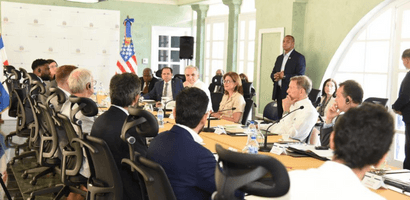
This Seventh Periodic Review Report evaluates the status of implementation of the Department of Labor's recommendations to the Government of the Dominican Republic in its public report of September 2013, issued in response to a public communication submitted under the Labor Chapter of the Dominican Republic-Central America-United States Free Trade Agreement (DR-CAFTA) regarding government enforcement of labor laws in the sugar sector.
In the 2013 Review Report, the Department of Labor provided recommendations related to
- government enforcement of labor laws and outreach,
- freedom of association and collective bargaining rights,
- the prohibition of all forms of forced or compulsory labor,
- a minimum age for employment and the eradication of child labor,
- and acceptable conditions of work.
The new report, dated September 13, 2022, evaluates the status of the recommendations from the 2013 Review Report. The Department of Labor recognizes that any discussion of labor rights in the sugar sector must address the current precarious legal situation of the great majority of field workers in the sugar sector, who are Haitian migrants or Dominicans of Haitian descent. The lack of documentation and irregular status of workers limit their ability to exercise their rights under Dominican law and the ability of the Government of the Dominican Republic to carry out outreach and enforcement activities in the sugar sector. Even stronger inspections and outreach efforts could be ineffective if workers constantly fear deportation; this fear leaves workers vulnerable to exploitation and forced labor. The National Migration Council, which includes the Ministry of Labor, the president of the Central Electoral Board, the Ministry of the Interior and Police, and the General Directorate of Migration, therefore has an important role to play in guaranteeing the protection of and access to rights for workers.
Light and shadow
This report highlights a series of efforts undertaken by the Government and the sugar companies, as well as renewed stakeholder commitment to move labor issues forward. It also points to areas that remain a matter of concern based on the recommendations of the 2013 Review Report. Over the next 12 months, the Department of Labor, in coordination with USTR and the State Department, including the U.S. Embassy in the Dominican Republic, will continue engaging Dominican government counterparts individually and through the Technical Working Group to identify concrete, time-bound steps that the Dominican government can take to improve labor-law enforcement and working conditions in the sugar sector.
The two congressmembers leading this initiative from the United States are:
- Representative Earl Blumenauer (Oregon, and Chairman of the House Ways and Means Trade Subcommittee)
- Representative Daniel Kildee (Michigan, House Ways and Means Committee)
Civil society organizations welcome the report insofar as it represents a new opportunity for the actors concerned to deepen the conversation on these thorny issues with the goal of achieving sustainable progress and ensuring full compliance with the rights of migrant workers in the sugar industry.