World Conference on Statelessness and Inclusion
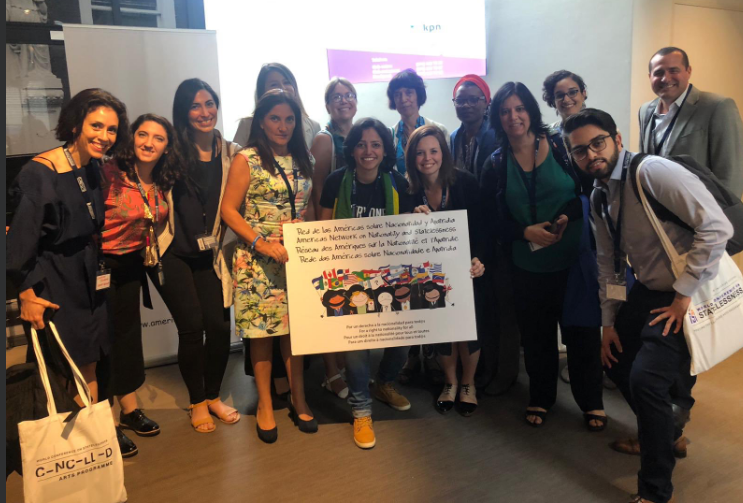
From June 26 to 28, 2019, some 300 activists, academics, artists, and representatives of international organizations gathered in The Hague, Netherlands, to share studies, strategies, and proposals on how to solve this problem with the aim of building more inclusive societies.
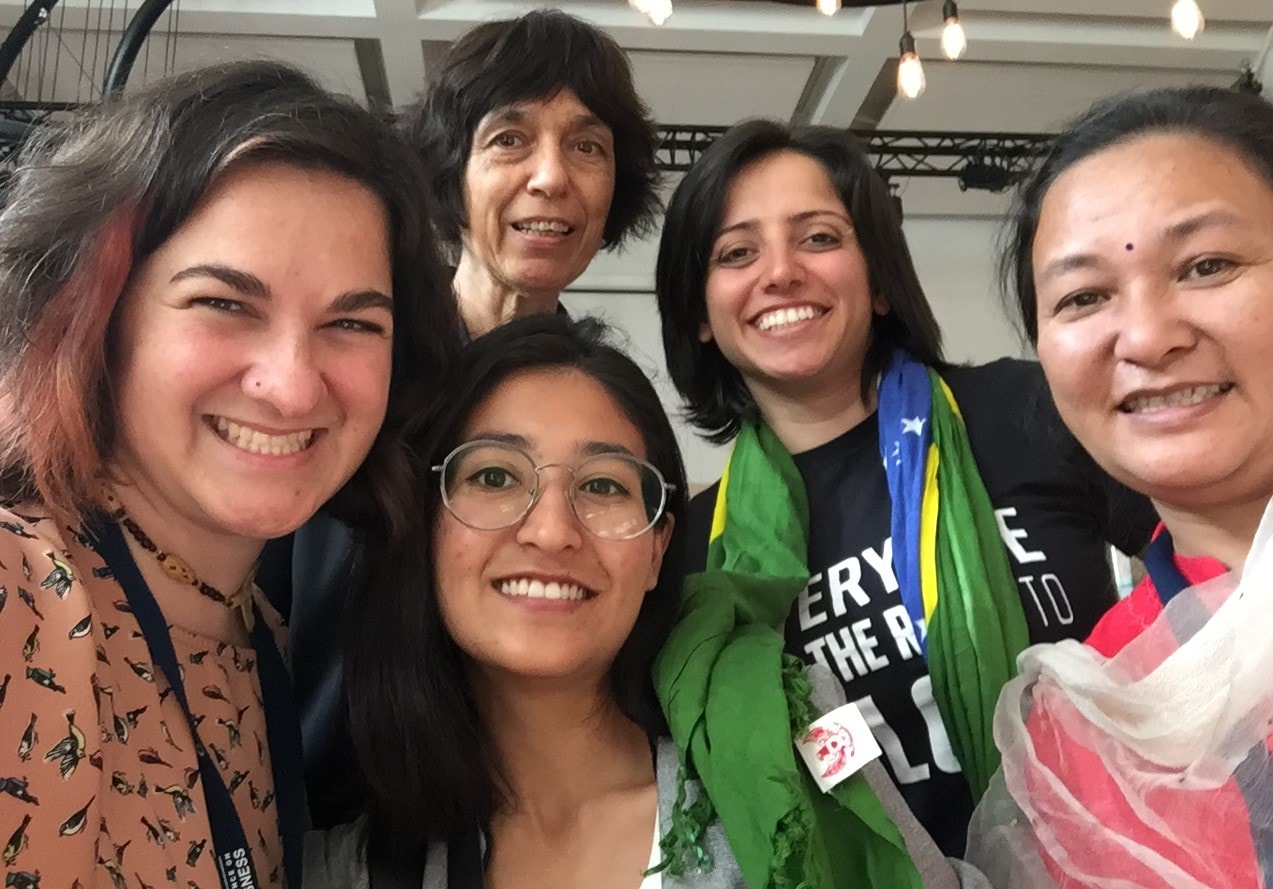
From June 26 to 28, 2019, around 300 activists, academics, artists, and representatives of international organizations gathered in The Hague, Netherlands, to share studies, strategies, and proposals on how to resolve this problem with the goal of building more inclusive societies. OBMICA was present both at the first world meeting on statelessness in 2014 and at the most recent one, both convened by the Institute on Statelessness and Inclusion (ISI).
Statelessness occurs when no state recognizes an individual's citizenship. According to the UN, more than 10 million people around the world are in this condition, including more than 100,000 people in the Dominican Republic. Stateless people face difficulties in enjoying their human rights, such as the rights to health, education, work, and due process.
Bridget Wooding, Director of OBMICA, presented the case of descendants of mixed Dominican-Haitian couples in a panel on difficult contexts for guaranteeing the child's right to a nationality. Meanwhile, associated researcher Allison Petrozziello facilitated a session on birth registration and the risk of statelessness, where she discussed measures introduced in the country that have hindered access to citizenship for descendants of migrants. Petrozziello also shared the research-for-action model so that other organizations can connect knowledge generation with advocacy actions, as OBMICA does. Both also participated in a roundtable organized by the European Network on Statelessness focused on applying feminist intersectionality theory to the issue of statelessness. The results of this discussion were taken up both in the plenary session organized by the Global Campaign for Equal Nationality Rights and in the closing plenary.
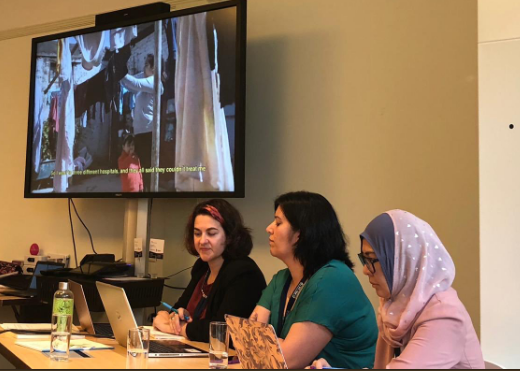
Important figures such as Carol Batchelor, Special Adviser on Statelessness to UNHCR, and Benyam Dawit Mezmur, member of the UN Committee on the Rights of the Child, highlighted the importance of the intersectional approach, given that multiple forms of discrimination generate the risk of statelessness and create differences in the life experience of affected people. The meeting also prompted reflections on the relationship between eradicating statelessness and achieving the Sustainable Development Goals (SDGs).
Specifically, SDG 16.9 states: "By 2030, provide legal identity for all, including birth registration." The conference questioned whether this objective should be interpreted as an opportunity or a threat, since with the introduction of new technologies there is no guarantee that the same people whom the state lacks the political will to recognize as citizens will not continue to be excluded. In this sense, the panelists recommended that the promotion of inclusion and non-discrimination should be an integral part of strengthening civil registration and vital statistics systems (CRVS). This is to ensure that initiatives to achieve SDG 16.9 do not undermine the central purpose of the SDGs: improving life for everyone, leaving no one behind.
"There are many affected people who, against all odds, have managed to build lives as workers, professionals, entrepreneurs, artists, and politicians. From Karl Marx to Albert Einstein to supermodel Iman, there are thousands of inspiring stories of people who lost everything and later became outstanding figures. Our purpose is to create a framework that allows this to happen, to empower them, facilitate access to their rights, restore their dignity, and provide space for them to make their way in this world. In some contexts it may seem impossible. But no situation is static. The question is not whether people will be free; it is only a question of how and when. It is our job to speed up the how and when."
- Radhika Coomaraswamy, keynote speaker, former United Nations Under-Secretary-General