
Five Issues to Take Away from 2021
We review highly relevant issues for understanding migration in 2021: the Prime Minister of Barbados won the UN's highest-level award on environmental issues after drawing attention to island states in the face of climate change; efforts and good practices by Colombia and the Dominican Republic in welcoming Venezuelan populations; Haitian migrants receiving more rejection and fewer
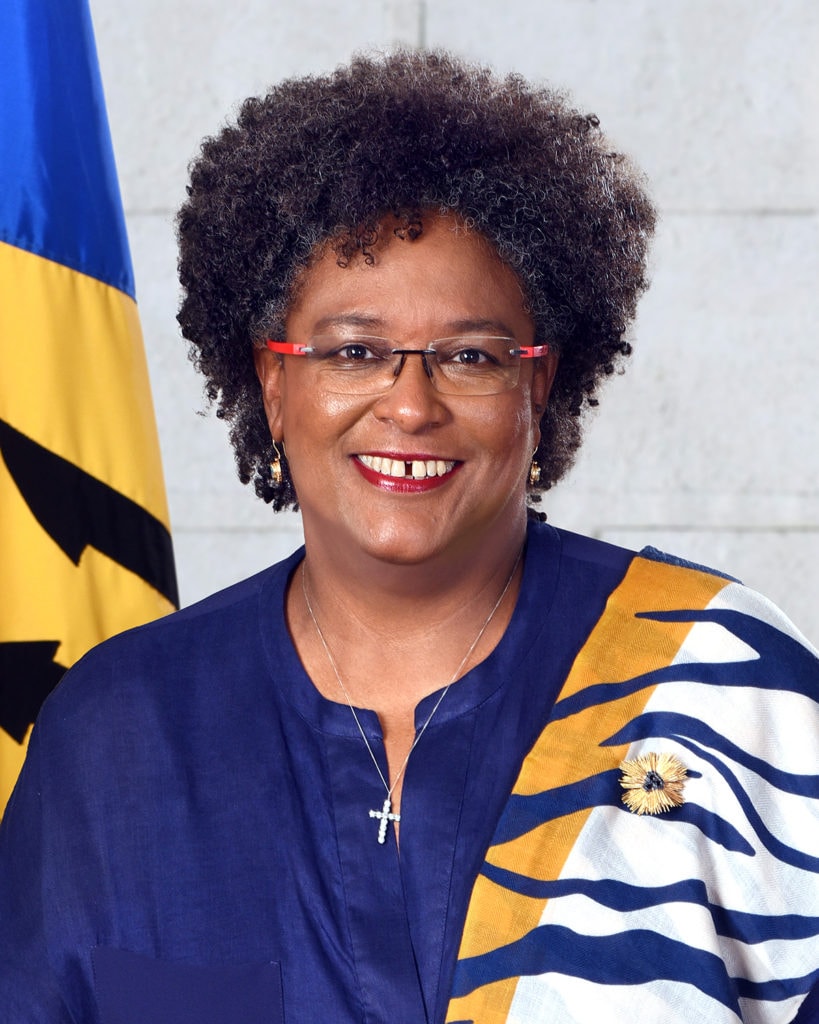
We review highly relevant issues for understanding migration in 2021: the Prime Minister of Barbados won the UN's highest-level award on environmental issues after drawing attention to island states in the face of climate change; efforts and good practices by Colombia and the Dominican Republic in welcoming Venezuelan populations; Haitian migrants receiving more rejection and less protection than other mobile groups; scarce legal channels for labor migration, resulting in increased migrant-smuggling networks and deadly incidents; and UNHCR Goodwill Ambassador Maha Mamo visiting the Dominican Republic.
COP26 in Glasgow
Barbados Prime Minister Mia Mottley won the United Nations' highest-level award on environmental issues in December 2021 after drawing attention to the fate of small island states in the face of climate change. Mottley stood out at COP26 in Glasgow with a forceful speech in which she warned her counterparts that "failing to provide sufficient critical financing to those states is measured in lives and livelihoods in our communities." Small island states such as Barbados are among the most vulnerable to the impact of climate change when rising global temperatures increase sea levels and threaten coastal communities. Despite its minimal contribution to global warming, under Mottley's leadership Barbados has set an example by committing to ambitious goals and becoming the first nation to adhere to a UN regional action plan to restore ecosystems before 2030. The award-winning leader highlights the relationship between climate change and migration, observing that the issue of loss and reparations associated with forced displacement is an undeniable point on the global agenda.
Welcoming the Venezuelan population
The context of the unprecedented exodus of Venezuelans toward destinations mostly within the region is one in which Latin America has welcomed immigration for two centuries, although of course never in such volume or so suddenly as in the last five years, due to Venezuela's profound crisis, even though it had previously been more of a host for other migrations. UNHCR has applauded the development of a new policy by Colombian President Duque toward the Venezuelan population in Colombian territory, praising it as "one of the most important humanitarian gestures of the last decade." Colombia's innovative policy contemplates the regularization of a cohort of 800,000 migrants with irregular status, granting them a 10-year temporary protection status, including residence. On the other hand, the important efforts that the Dominican Republic launched in 2021 should also be recognized. There is currently a special regularization plan underway for Venezuelan migration with irregular status, and it is hoped that it may positively change the status of approximately 50,000 applicants.
Haitian mobility on the rise
Haitians in mobility represent a "bete noire" in Latin America and the Caribbean where they plainly receive more rejection and less protection compared with other mobile groups in the region. In the global North, at the US/Mexico border, since September more than 10,000 Haitian migrants have been expelled to Haiti by the Biden administration without adequate due process; 44% are women and children (IOM 2021). In the Dominican Republic, new restrictive policies on access to public health have led to the expulsion to Haiti of numerous pregnant or breastfeeding Haitian women as a result of arbitrary raids in maternity wards (Resolution of November 30, IACHR 2021). In December, the Jesuits of Haiti led a public hearing before the IACHR concerning people returned from other countries in the region. Their petitions to the Haitian government touch on the need to provide identity documents, including passports, to returnees; a stronger stance regarding mistreatment, for example in Texas; efforts toward reintegration in their communities; and psychosocial support strategies.
Scarce legal channels for labor migration
On Thursday, December 9, in the afternoon, the Latin American community was shaken by tragic news. A truck carrying 160 migrants overturned after crashing into a wall, reportedly due to speeding, in Chiapas, Mexico. Fifty-five of them died and 104 were injured. The Dominican Foreign Ministry confirmed the death of six Dominican migrants in the tragedy, along with three injured and seven missing. In 2020, 224 Haitian migrants were intercepted at sea, and 605 in 2021. The number of Haitians attempting to emigrate through unofficial routes to neighboring countries in boats has increased significantly. Economic hardship, insecurity, and the recent earthquake are pushing them to leave in search of what they believe will be a better life (IOM 2021). Scarce legal channels for labor migration result in an increase in migrant-smuggling networks and in incidents that often end in fatalities.
UNHCR Goodwill Ambassador Maha Mamo visits the Dominican Republic
During the first 30 years of her life, human-rights defender Maha Mamo, born in Lebanon, lived as a stateless person, and that legal condition deprived her of her dreams of becoming a professional basketball player and a doctor, while also making access to basic education and health care difficult. When delivering the opening lecture in December at the 11th Dominican Conference on Gender Studies, organized by the Center for Gender Studies of the Technological Institute of Santo Domingo (INTEC), Mamo argued that lacking documents turns people's lives into a permanent challenge. The international speaker called for all countries of the world to create policies that legally favor migrants, refugees, and stateless persons, and lamented that there are currently nearly 10 million people in the world without nationality. In this bulletin, OBMICA interviews her.