
Moving Toward Civil Registration
July 25, 2017. The Mixed Couples Project continues to report progress in advocacy to enforce the right to Dominican nationality for children of Dominican fathers and foreign mothers.
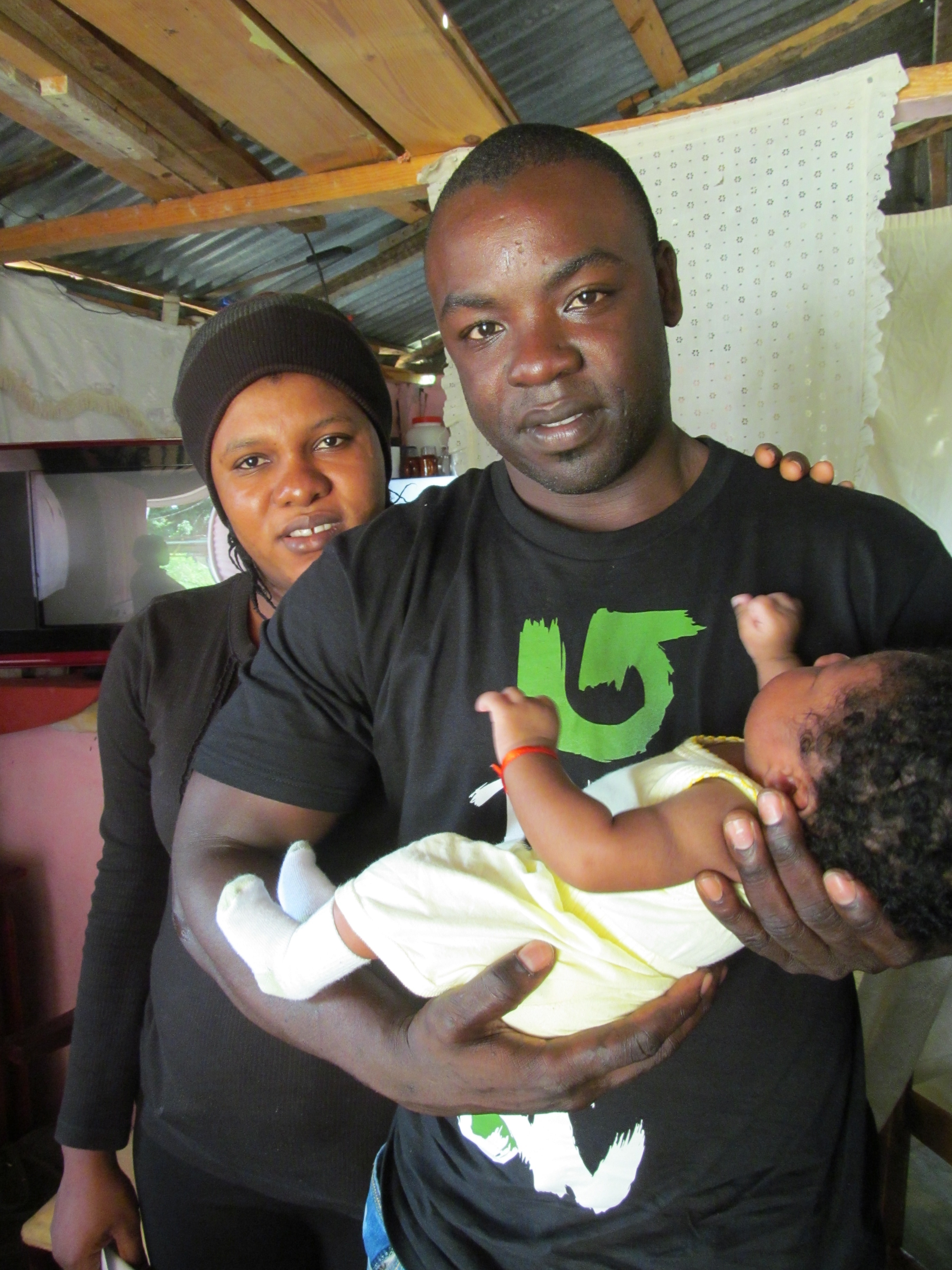
Although the Dominican Constitution provides that children of a Dominican father or mother are Dominican (Article 18), in practice access to this right is obstructed when the mother is foreign or undocumented. This is due to a series of factors that OBMICA, together with MUDHA, has been documenting through a three-year project supported by the European Union.
Initially, we conceived mixed couples as a marital or parental union between a Dominican and a foreign woman, or vice versa. During the first year of the project, we developed typologies of mixed couples that require us to broaden the concept to include not only Dominicans and foreigners, but also Dominicans of Haitian descent from the so-called “group B,” whom Law 169-14 has treated as if they were foreigners even though they were born in the Dominican Republic. Thus, a mixed couple includes any “marital or parental union between persons with different documentation situations that make it difficult to establish jus sanguinis for the registration of the birth of their children in the Dominican Republic.”
MUDHA's experience in legally accompanying mixed couples shows that, on the one hand, in some circumstances it is possible to register their children as Dominicans and, on the other hand, that it is necessary to continue clarifying procedures to restore the right to Dominican nationality for the 28,611 children and youth who constitutionally should have birth certificates and nationality but have not been able to access that right.
As OBMICA argued on the Teleantillas program “Uno + Uno” on May 29, the situation of statelessness and/or civil registration in the country can be resolved if there is political will, and the profile of mixed couples is an example of this.
Obstacle: Access to Dominican civil registration depends on the willingness of the Dominican father to recognize his child. While child support is mandatory, paternal recognition still is not.
Proposed solution: Promote paternal involvement and responsibility. We welcome the progress in the Senate of the Republic of the Responsible Fatherhood bill, authored by Magistrate Jose Manuel Hernandez Peguero, in May 2017. OBMICA has joined forces with World Vision, UNICEF, and other organizations defending children's rights, calling for the bill to be approved by the Chamber of Deputies before the current legislative term ends in July 2017. If it becomes law, it will guarantee boys and girls the fulfillment of the right to be declared by their father. In the case of children of mixed couples, it could also facilitate their enjoyment of the right to Dominican nationality.
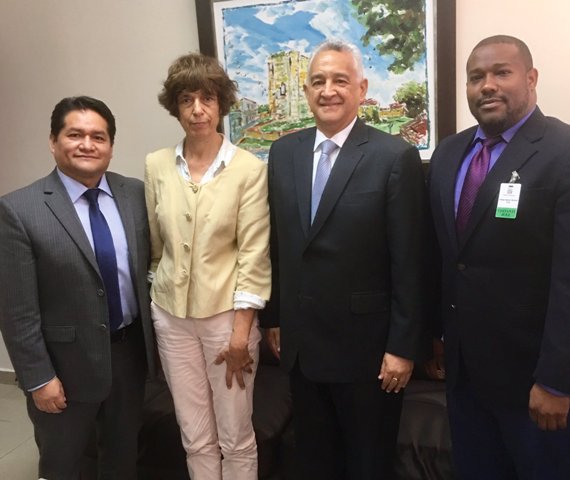
Obstacle: Procedural costs associated with late birth registration amount to about 4,000 pesos per child, and up to 6,000 if the certificate of live birth contains an error. Many families do not proceed with registration because it is costly.
Proposed solution: Together with UNICEF, advocacy is underway for the simplification of the process, echoing what President Medina promised in the 2016-2020 Government Plan: “we will simplify procedures for identity documents for families living in poverty and extreme poverty.” In particular, the goal is to eliminate the requirement of judicial ratification for late birth registration. In the short term, it is recommended to allow more than one child of the same father and mother to be included in a single sworn statement, a measure that would also reduce costs.
Obstacle: The issuance of the “foreign live birth certificate” by health personnel creates confusion among Civil Registry Officers, who are denying registration in the Dominican civil registry even when the father is Dominican.
Proposed solution: Since late 2015, there has been dialogue with the Ministry of Public Health about the possibility of eliminating the pink foreign live birth form and replacing it with a single form including family data. We welcome the acceptance of our proposal to create a single live birth certificate form in the proposed Civil Code reform. However, this bill requires further review, since it includes other articles that could be problematic for guaranteeing the right to identity and nationality of other persons.