
Climate Change, Natural Hazards, and Migration: A Reality in the Insular Caribbean
Disasters caused by natural hazards can trigger migratory movements. This is not new, but the intensity of what happened last year in the insular Caribbean was unprecedented. This article is by researcher Julia Harrer, an expert on climate change, environment, and migration.
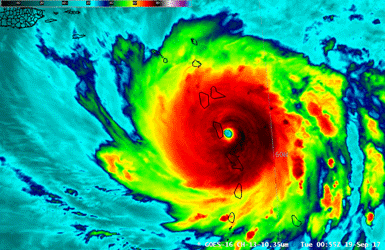
As a result of the damage and destruction caused by Hurricanes Irma and Maria in 2017, thousands of people left Puerto Rico for the United States. This migratory flow worsened the already significant emigration driven by the territory's critical economic situation. Recent extreme events in the region have, however, produced such a sharp increase in emigration that one can speak of a true exodus.
What happened in Puerto Rico is a situation that could easily be repeated in other Caribbean territories exposed to natural hazards. In Dominica, for example, the government estimates that around 73,000 people will soon leave the country because of the level of destruction experienced. According to statistics from reinsurer Munich RE, a total of 328 people died as a result of Hurricanes Irma, Harvey, and Maria in the United States and the Caribbean. In addition, those storms generated damage amounting to 67, 85, and 63 billion dollars respectively, of which only about half was insured. Based on these figures, hurricanes topped the statistics in terms of losses generated by disasters in 2017.
Dominica
In this context, Dominica was one of the hardest-hit islands: 100 percent crop losses and 90 percent of infrastructure destroyed. This level of impact shows how natural hazards can affect a population's quality of life and means of subsistence, forcing people to leave their land. In this sense, emigration can be interpreted as an adaptation strategy: the population of areas highly exposed to natural hazards, or living in vulnerable conditions, migrates to safer places. However, the reality is different and less encouraging: people migrate because there are no alternatives.
Dominican Republic and Haiti
For example, in the Dominican Republic, Hurricane Maria caused severe flooding and strong winds, uprooting many trees and destroying public lighting in different parts of the country. In the northern region, for example, 350,000 homes in 14 provinces were left without electricity and more than 14,000 people were evacuated, among them 4,000 displaced tourists. In the context of natural hazards and disasters on Hispaniola, it is also important to remember the 2010 Haiti earthquake, for which the Dominican Republic established a humanitarian corridor, thereby facilitating international support for Haiti. Situations such as this call on governments to be prepared to manage possible migration flows of this kind.
Looking ahead
A relevant factor to take into account is that in the future climate change is expected to produce more extreme events like these, and according to estimates, with greater intensity and frequency. Environmental changes call on governments to plan against natural hazards and reduce the risks associated with them. At the same time, they place on the table the question of how to address migration associated with climate change and extreme events.
How can migration governance be improved worldwide? Finding answers to this question is one of the priorities on the United Nations agenda for this year. The organization is currently guiding different governments toward decisive negotiations on the so-called "Global Compact on Migration," to be addressed at an intergovernmental conference in September in New York. In addition to global-scale actions that take into account human rights in the context of climate change and the environment, it is also important to prevent the possible negative environmental effects of development projects on communities. Fortunately, the Americas have once again taken the lead with an unprecedented agreement explained below.
Important event in regional multilateralism
Precisely two years after the murder of a prominent environmental activist from Honduras in March 2016, 24 countries of Latin America and the Caribbean agreed on a binding accord to protect environmental activists against harassment and attacks.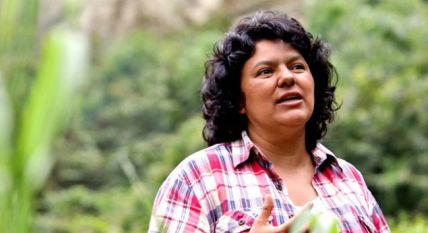
The measure, known as the Regional Agreement on Access to Information, Public Participation and Access to Justice in Environmental Matters in Latin America and the Caribbean, also seeks to give a voice to people affected by development projects regarding their approval and how to appeal if a project harms them. The agreement is the first binding treaty on environmental rights in the region.
"This was done with ordinary people in mind," explained Karetta Crooks Charles, a communications officer of the St. Lucia National Trust, who helped negotiate the measure.
"It is not only a Latin American issue, it is also a Caribbean issue," explained Danielle Andrade, an environmental lawyer from Jamaica. "We have seen a lot of social conflict in the region when people feel they have no voice in the decisions that affect their lives."
Beyond strengthening protections for environmental defenders, the convention aims to:
• Increase access to information on pollution and development projects,
• Guarantee public participation in the assessment of a project's impact,
• Ensure that all key actors - especially vulnerable populations that may face barriers due to language or costs - have the opportunity to take part in debates,
• Provide technical and legal assistance to individuals and groups who could be harmed by a project.
Since the convention has been adopted, states may ratify the agreement at the United Nations in September. Once 11 states ratify it, the agreement will enter into force. For the Caribbean as well, it presents an opportunity to begin a dialogue on human rights, climate change, and the environment.
THE AUTHOR
Julia Harrer is a visiting researcher at OBMICA, where she studies the connection between climate change, natural hazards, and migration in the insular Caribbean. She is currently pursuing her doctorate at IUSS Pavia University, Italy, in the program "Understanding and Managing Extremes." She studies institutional capacities and public policies in risk reduction with a focus on the Dominican Republic and Haiti.