Assessment and outlook of the Normalization Plan for Venezuelans in the Dominican Republic
By Sebastian Gerardo Viala, OBMICA associate researcher.
On the occasion of the official launch of the Dominican Republic's first candidacy to become a member of the United Nations Human Rights Council (UNHRC) in June 2022, the implementation of the Normalization Plan for Venezuelans (PNV) was highlighted as an achievement that supports, among other things, the country's candidacy for that body.
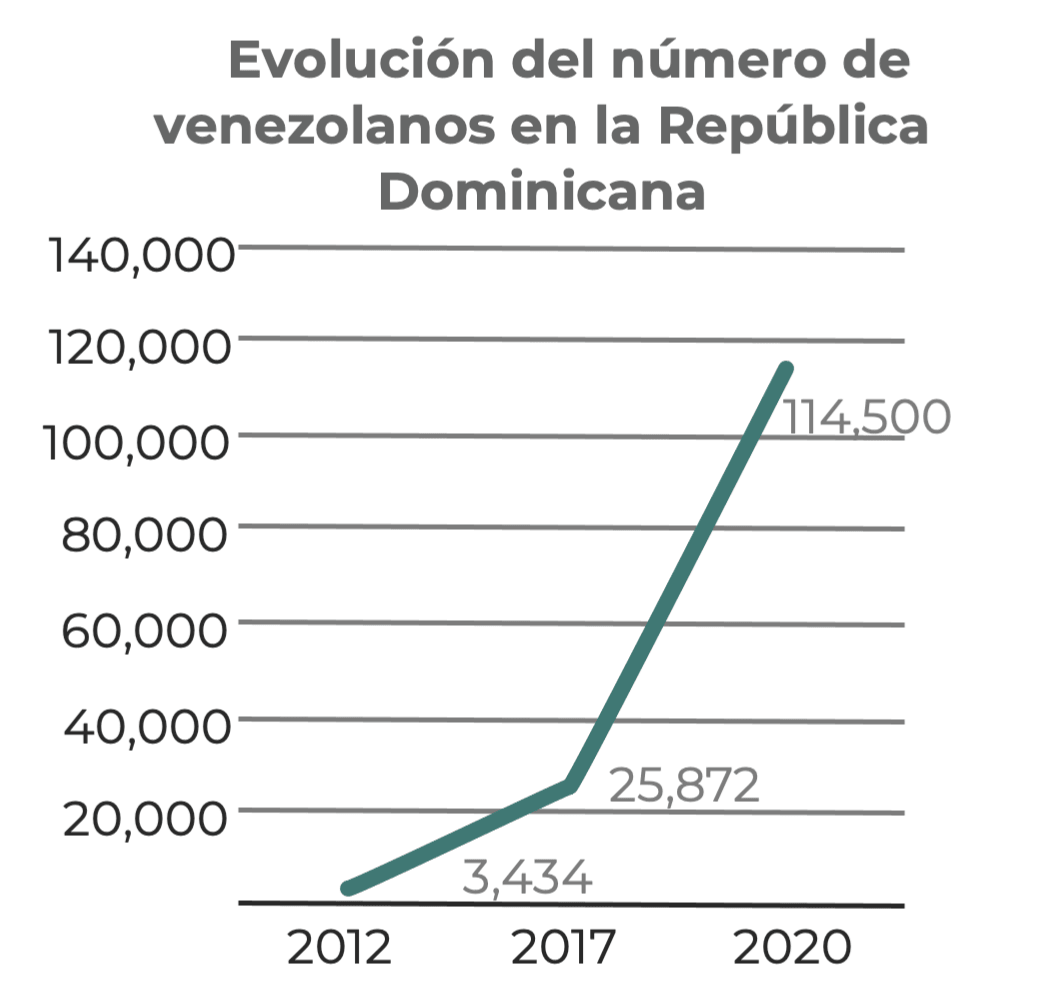
For 2020, it is estimated that around 114,500 Venezuelan citizens remained in the national territory, making them the second-largest immigrant group in the country. More than a year after the Plan began, it is worth analyzing the progress and limits of this initiative.
Recent context of Venezuelan migration
In September 2018, the UNHRC adopted an unprecedented resolution expressing concern about "serious human rights violations" and calling on the Venezuelan government to "accept humanitarian assistance in order to address the shortages of food, medicine, and medical supplies [...]". It is estimated that today around 6.8 million Venezuelan migrants and refugees have fled their country, 5.7 million of them in Latin America and the Caribbean. Like many other countries in the region, the Dominican Republic has received around 115,000 Venezuelans from this exodus, making it the principal destination for this population in the Caribbean.
The ease with which Venezuelans entered the Dominican Republic was due to the fact that upon arrival they only had to pay for the tourist card, which authorizes visitors to remain in the country for a maximum of 30 days. However, most Venezuelans who had entered regularly with a tourist card or tourist visa remained in the country after those documents expired, thus becoming migrants in an irregular situation.
About the Normalization Plan
As a result of this situation, organizations from the Venezuelan community in the Dominican Republic formulated a proposal to the Dominican state to regularize the Venezuelan population in the country. In January 2021, the government issued Resolution 00119-2021, establishing more flexible procedures so that Venezuelans could regularize their status through a Normalization Plan for Venezuelans (PNV). The PNV grants Venezuelan nationals the possibility of carrying out migration procedures with expired passports from their country without having to return to Venezuela to begin the process, thus eliminating the two main obstacles to their migration regularization.
The PNV comprises three phases:
- an extension of stay in the country for 60 days
- issuance of a student or temporary worker visa by the Ministry of Foreign Affairs
- issuance of a temporary worker or student card/permit, which began in October 2021.
Benefits
At first glance, everything suggests that the Plan provided new benefits and opportunities to the target population.
First, the cancellation of fines for overstaying the authorized time in the country was widely welcomed, and the extension of stay made it possible to provide Venezuelans with regular status, thus correcting a situation in which migration irregularity predominated within this group. This is crucial for many Venezuelans, who are now able to exercise the right to freedom of movement without fear of arrest and deportation for migration irregularity. Likewise, the security of being able to leave the Dominican Republic without being barred from re-entering Dominican territory has a positive effect on the mental health of Venezuelan migrants and refugees. Access to healthcare in general improved, since having a visa allows a foreign national to enroll in insurance. People admitted under the PNV were even able to access COVID-19 vaccination.
On the other hand, the PNV was decisive for integration into the Dominican labor market, which is fundamental for people to be able to meet their basic needs. For example, beneficiaries positively highlighted the fact that facilities were granted to request a worker card without having to present bank statements or provide proof of formal employment. This is important because, in addition to generating formal income, the worker card gives access to other rights, such as the homologation of the Venezuelan driver's license in the country. Another fundamental element is the financial inclusion of the migrant and refugee population in the Dominican Republic, through the circular of the Superintendent of Banks authorizing Venezuelan nationals to use expired identity documents for banking transactions, a crucial advance toward access to credit and social security.
Finally, it is important to note that PNV users also have access to justice, a fundamental element for people in situations of vulnerability to defend their rights and report abuses, especially cases of gender-based violence.
Limitations
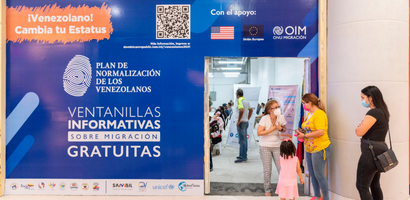 Despite this effort, barriers remain for the full realization of Venezuelans within Dominican society. The Plan only enables applicants to apply in the "Non-Resident" category, which clearly demonstrates the temporary nature of the PNV, which only mentions annual renewals. Being "Non-Resident" requires an individual visa, excluding any possibility of family reunification and de facto dividing Venezuelan families. Another risk is that this executive resolution depends on the discretion of the President of the Republic, and in the event of a change of government it could be left without effect.
In addition, only the Venezuelan population that arrived between January 2014 and March 2020 is eligible for migration regularization, which sidelines most of the Venezuelan community that arrived later. These people remain with irregular status unless they seek regularization through the ordinary route. There were cases of people who managed to pass the first stage (extension of stay) and the second stage (visa issuance), only to be denied issuance of the card in the third phase for falling outside the dates of the Plan. On the other hand, the PNV's promise to process procedures with an expired Venezuelan passport could not be fulfilled in some circumstances. Regarding enrollment in the Social Security Treasury (TSS), cases were reported in which it was not possible to complete the affiliation process with an expired passport, even when the person had a worker card and was already on a payroll. Likewise, at least two banks were reported as not complying with the Superintendency of Banks resolution on opening bank accounts and accessing other financial services with an expired Venezuelan passport, which limits this group's participation in the local economy.
The case of children of Venezuelans born in the Dominican Republic
The births of children of Venezuelan parents in the Dominican Republic raise new concerns. Resolution 00119-2021 stipulates that these children do not enjoy ius soli, so they are recorded in the civil registry book as foreigners. These children fall into a legal limbo in terms of nationality because transcription of the Dominican birth certificate for foreigners in Venezuela is a slow process. Parents often do not meet the requirements of the Venezuelan state to be able to register the child from the Dominican Republic, forcing them to return to Venezuela to complete the procedure. During this lapse, minors remain without any nationality, a situation that hinders the exercise of a set of rights that derive from nationality.
Assessment
In general terms, the Normalization Plan for Venezuelans (PNV) is a positive experience, making it possible to provide a legal solution to Venezuelans who for years had been in an irregular migration situation. So far, more than 40,000 people have enrolled in the PNV, and almost 22,000 visas have been issued to Venezuelan nationals, the majority as temporary workers and with a slight feminization in line with the percentage of Venezuelan women in the country, who outnumber men. This is a qualified labor force that contributes to the development of the Dominican economy. However, although regularization is a step forward in guaranteeing the rights of foreigners, the PNV has limits in terms of its temporal scope and the non-resident status, affecting the possible long-term establishment of many Venezuelan families. In addition, there is a paradox insofar as the PNV recognizes that there are "extraordinary circumstances" in Venezuela that have led to a massive departure of its citizens abroad, who need specific protection. Yet people who chose to renounce the PNV and continue as asylum seekers do not receive a response from the National Commission for Refugees (CONARE). For these reasons, better inter-institutional coordination by the state is needed for the following PNV extensions, so that all entities comply with the Plan's measures to make procedures more flexible for Venezuelans.