
Applying Naturalization Law 169-14: Challenges and Progress
August 4, 2014--On May 23, the Executive branch of the Dominican Republic enacted Law 169-14, defined by the Dominican@s por Derecho platform as 'a step forward in the search for a solution to the conflicts generated by Ruling 168-13' and to the unjust situation experienced by thousands of Dominicans whose access to identity documents proving nationality has been denied
4 August 2014--On May 23, the Executive branch of the Dominican Republic enacted Law 169-14, defined by the Dominican@s por Derecho platform as "a step forward in the search for a solution to the conflicts generated by Ruling 168-13" and to the unjust situation experienced by thousands of Dominicans whose access to identity documents proving nationality has systematically been denied or limited by government agencies.
The new legal text establishes "a special regime for the benefit of children of non-resident foreign fathers and mothers, born in national territory during the period from June 16, 1929 to April 18, 2007, registered in the books of the Dominican Civil Registry on the basis of documents not recognized by the rules in force for those purposes at the time of registration; and the registration of children of foreign parents in irregular status born in the Dominican Republic who do not appear registered in the Civil Registry." That is, it divides the beneficiaries into two groups for which it offers different routes to a solution.
While it is true that Law 169-14 finds a way to correct part of the tragedy of denationalized persons, its correct implementation poses major challenges in overcoming the administrative obstacles directed at Dominicans to whom Circulars 012 and 017, issued by the Central Electoral Board, and Ruling 168-13, which, as sociologist Rosario Espinal summarizes, "illegalizes all descendants of undocumented immigrants for several generations (the majority of Haitian origin) and constitutionally creates a second-class caste."
In other words, the affected population remains at the starting point: facing agencies that interpret the laws to the detriment of citizens and the discretion of local authorities in determining the validity of their rights even when protected by the Constitution. Such is the case of the birth certificate audit process ordered in Ruling 168-13, which, according to statements by JCE president Roberto Rosario Marquez reported in the media, must conclude before documents are returned to the first group of beneficiaries under Law 169-14.
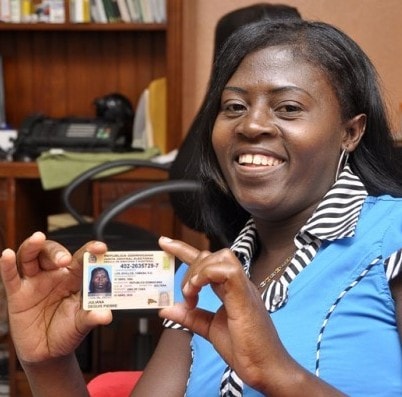
August 1 marked a milestone in the restoration of the right to nationality for the affected population: after several unsuccessful attempts, the JCE delivered Juliana Deguis Pierre her identity card, accrediting the Dominican citizenship that corresponds to her by law. Since 2008, the JCE had retained her birth certificate despite its having been issued by a competent authority and properly recorded in the Dominican civil registry. Through an amparo action, the young woman had requested the return of her document, thereby becoming a symbol of the struggle of the denationalized. Her case gave rise to Ruling 168-13.
Two years after bringing multiple actions before different Dominican courts, Juliana can now exercise her rights as a citizen. The first thing she said she would do with her identity card, according to an interview with the newspaper Hoy, is register her four children, ages 13, 12, 7, and 5.
Civil society continues to monitor closely the implementation process of the new Naturalization Law, in order to guarantee the full restoration of the acquired rights of the denationalized population and to promote a fair solution for the population that was never registered.
For more information about the Right to nationality, enter here.