Global Conference on Statelessness and Inclusion
Statelessness occurs when no state recognizes an individual as a citizen. More than 10 million people around the world are in this condition, including more than 130,000 in the Dominican Republic. Stateless people face difficulties in enjoying their human rights, including the rights to health, education, work, and due process.
From February 26 to 29, 2024, around 450 activists, academics, artists, and representatives of international organizations from 50 countries gathered in Kuala Lumpur, Malaysia, to share research, strategies, and proposals on how to eradicate this problem with the aim of building more inclusive societies. Around 100 participants were people in fragile documentary situations with lived experience, in the sense that they had previously been stateless, are stateless, or are at risk of statelessness.
The three days of the conference focused respectively on Knowledge, Solidarity, and Change.
A problem that respects no geography
Before addressing these three broad themes, sessions were organized to take stock of progress toward eradicating statelessness by affected region, namely:
- Africa
- Americas
- Asia Pacific
- Europe
- MENA
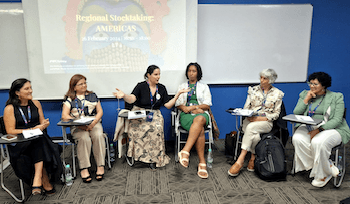
Americas panel
Although there has been progress against gender bias discrimination in nationality laws in territories such as Suriname and the Bahamas, there is still no clarity in practice regarding the real scope of some of these efforts. For example, in the case of the Bahamas, Alicia Wallace, based in Nassau, briefed us on some apparent setbacks that still need to be addressed. As is well known, the crisis persists in the Dominican Republic, where, according to official figures, more than 130,000 people remain in a situation of statelessness. OBMICA detailed the slow and uneven progress in implementing Law 169-14 as a remedy to the mass denationalization caused by the Constitutional Court ruling of September 2013. Also of concern is the recent situation in Nicaragua involving arbitrary deprivation of nationality. This is occurring in a context marked by:
- The increase in forced displacement and large-scale mixed movements, including difficulties in accessing birth registration procedures, the lack of identity and nationality documentation, and the acquisition of nationality at birth.
- The lack of protection frameworks for stateless persons, the absence of statelessness determination procedures, and other mechanisms to identify stateless persons.
Good practices: Nevertheless, the speakers from Chile, Macarena Rodriguez, and from Colombia, Ana Maria Morena, were able to discuss tangible progress in their respective countries through programs addressing the risk of statelessness for children born to Venezuelan parents. In Colombia, for example, the "Primero la Ninez" measure was extended for two more years in 2023. As of September 2023, the measure had already guaranteed recognition of Colombian nationality for children born in Colombia to Venezuelan parents, helping prevent statelessness in the country. It has been recognized in numerous international forums as a benchmark of good practice for states in the field of international protection.
For her part, Nydia Juarez of the IACHR summarized the contributions of the inter-American human rights system to the eradication of statelessness, indicating that more can still be done. In that regard, she concluded on the need to:
- Strengthen work with civil society organizations, regional and international human rights organizations, and other relevant actors.
- Ratify specific international instruments on the protection of stateless persons and the reduction of factors that generate statelessness.
- Promote shared responsibility and international cooperation among states to provide durable solutions to people who might otherwise be at risk of statelessness.
- Five protracted situations
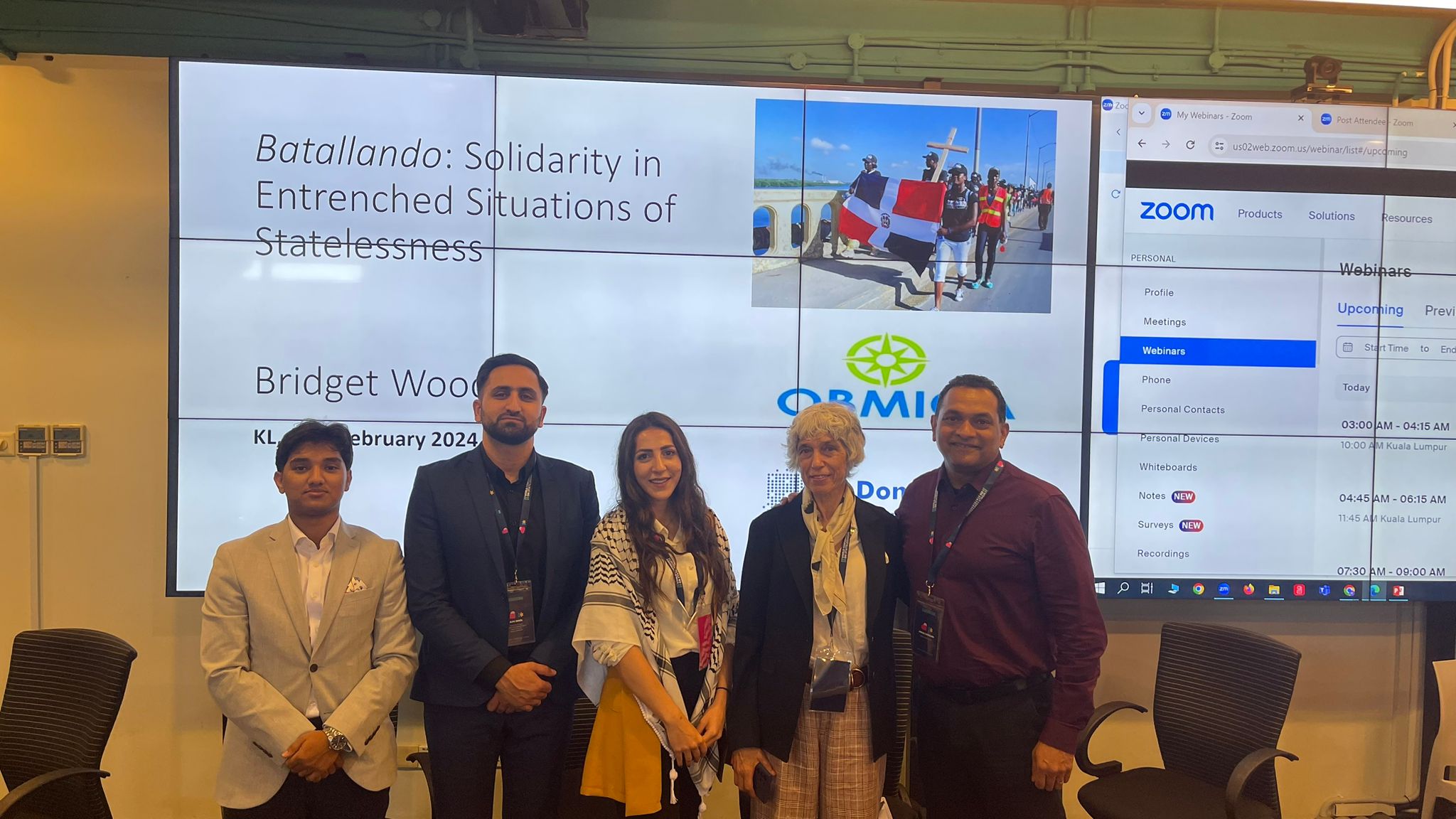
This panel was organized in an engaging conversation format. At first, the panelists addressed the following: the specific scope of diverse situations facing the global community in terms of support, solidarity, and action; the public spotlight and why it has focused where it has; the specific support or action that has been sought; how it has been received and developed; certain achievements worth sharing; and some mistakes to avoid in the future.
In a second stage, the discussion focused on the most viable components of a renewed strategy that could make it possible to build solidarity and empathy on a global scale when it comes to reaching sustainable solutions in long-term situations of statelessness.
Covid impact
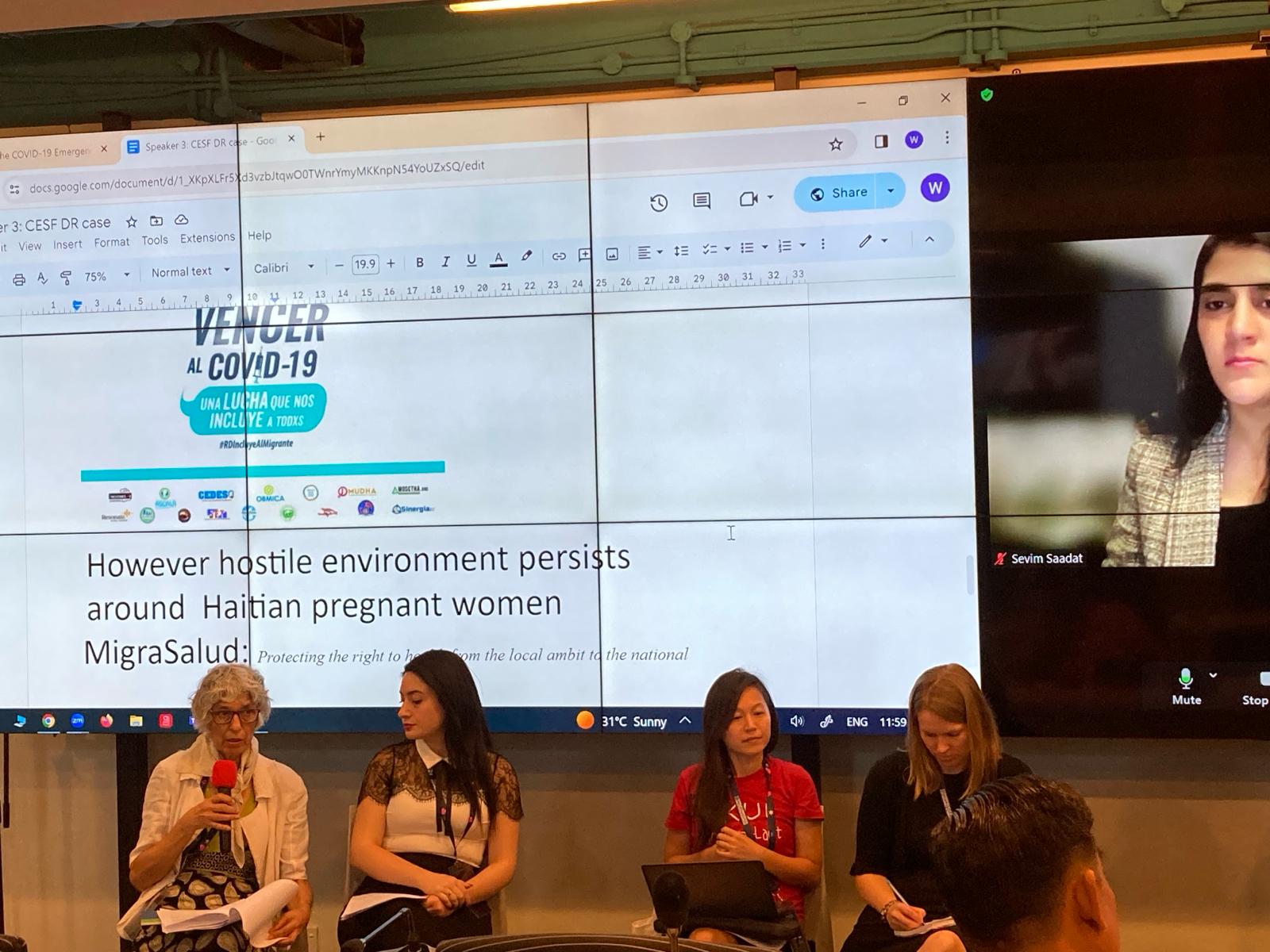
The common denominator on this panel was the participation and leadership of women speakers in Asian, MENA, and American contexts in response to a call by ISI to develop a joint response to the 2020 pandemic. This took place in light of increased visibility of the disparities affecting vulnerable groups, as was the case for stateless communities. It marked a turning point. The panel showed the diversity of responses. In the Dominican Republic, one especially notable achievement was the successful struggle to secure more equitable access to vaccines beyond people holding Dominican identity cards. It also paved the way for deeper work in the field of access to public health both for migrants and for their relatives, whose claims for restoration of Dominican nationality remain challenged.
Launch of the Global Movement
Bringing to a close a process that began during the first global conference in The Hague in 2019, the Malaysia conference provided the opportunity to formally launch the global movement on February 27, 2024. This Global Movement Against Statelessness is a community of stateless people, activists, and civil society allies dedicated to eradicating statelessness, achieving equal rights to nationality for all, and defending the human rights of stateless persons. The Movement focuses on and is led by people directly affected by statelessness, deprivation of nationality, and discriminatory nationality laws, and works to increase solidarity in this field. It seeks to bring us closer together in order to strengthen collaboration and generate positive change.